
28 mayo, 2026 / Entrevistas
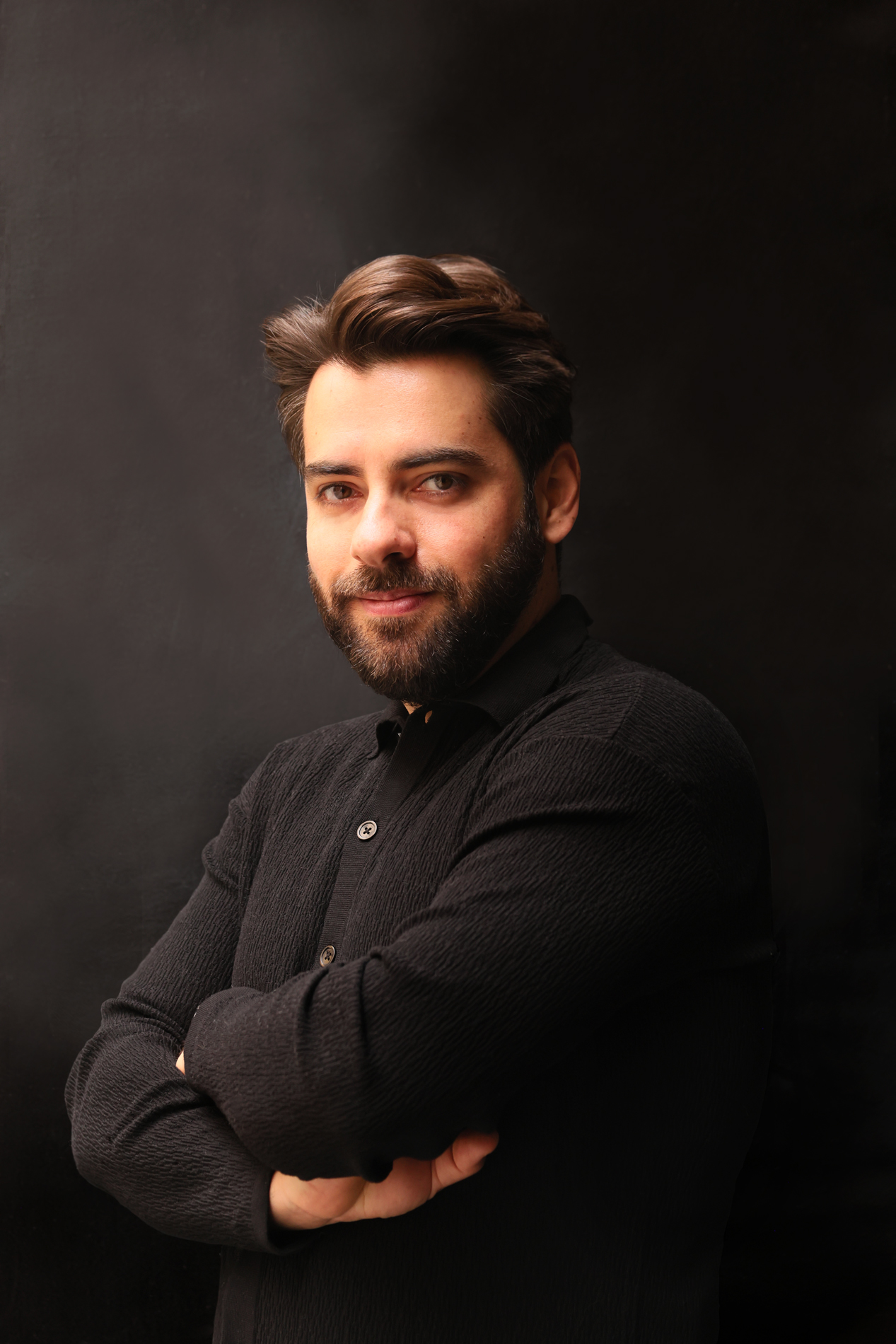
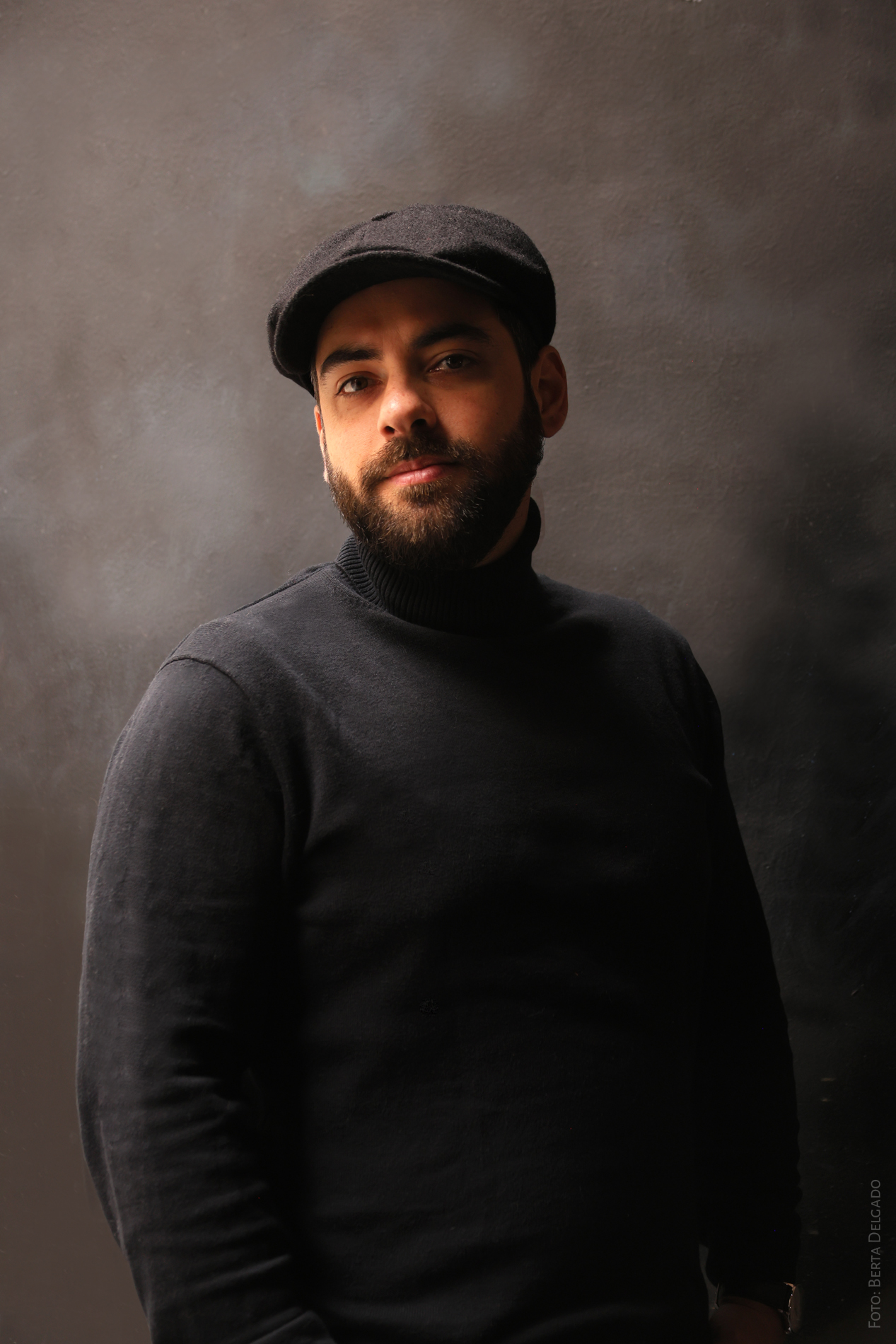
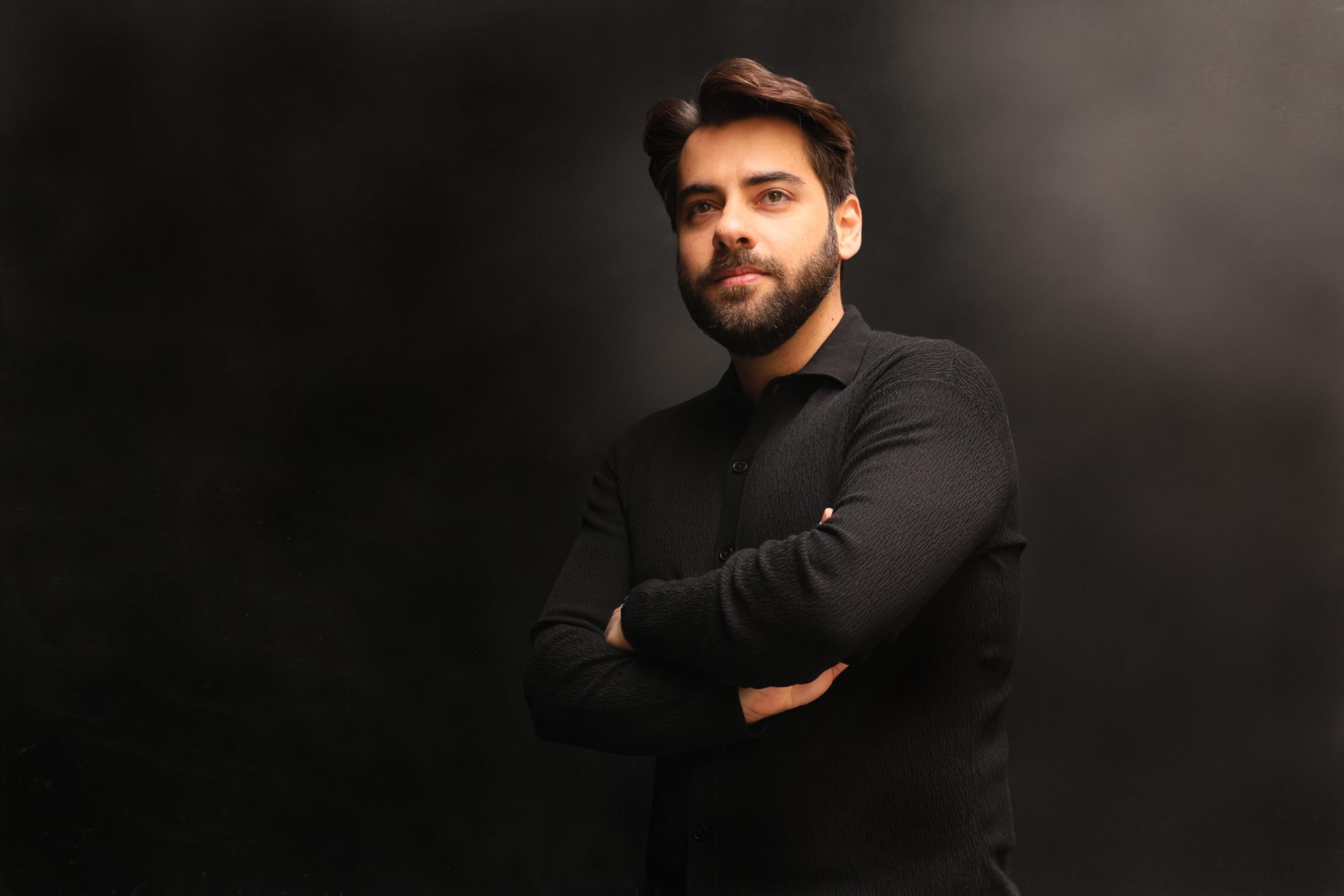
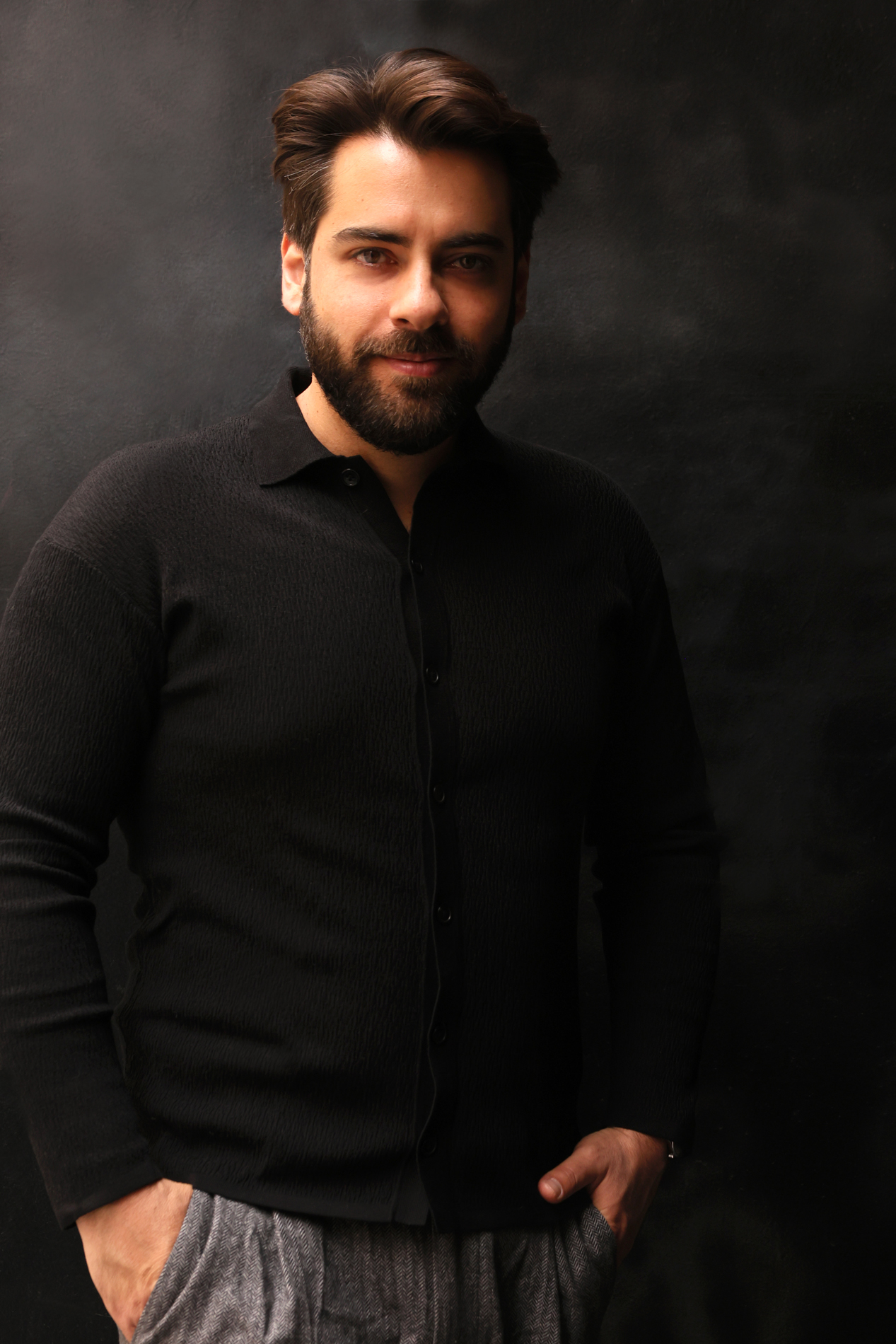
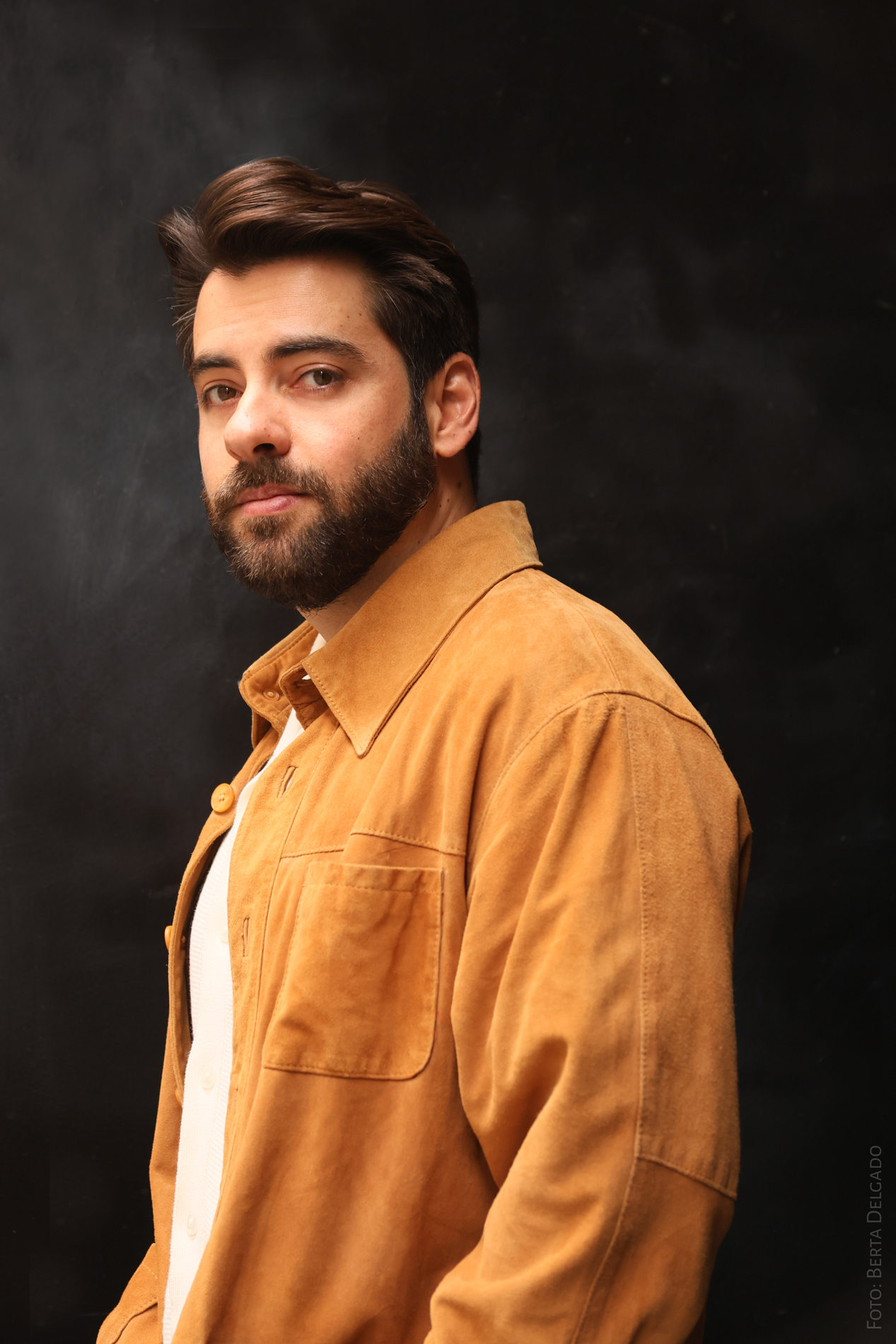
Jesús Gómez - Artista
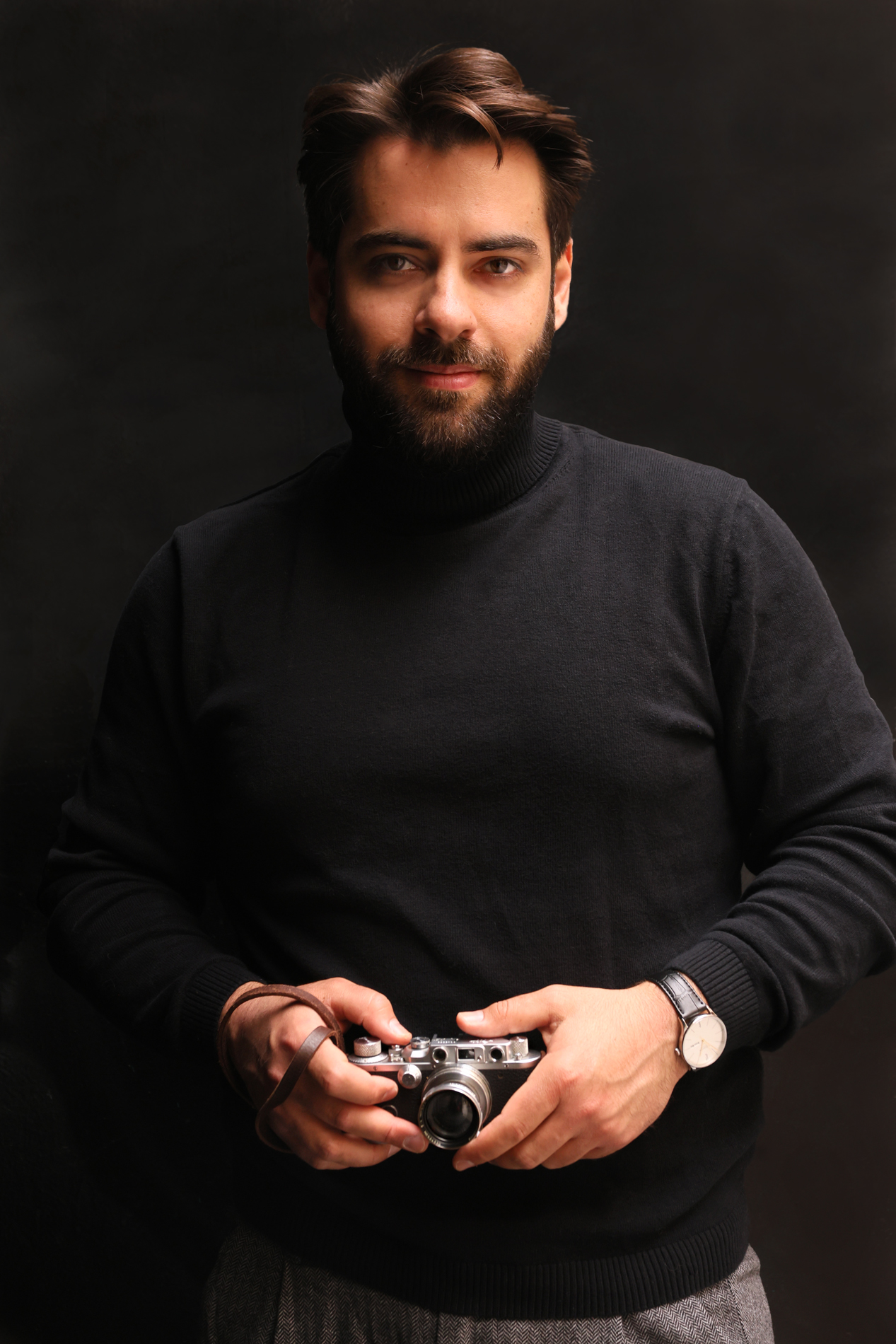
«I experience memory as something fragile and precious that must be preserved at all costs.»
Jesús Gómez was born in Madrid in 1987 and grew up in Valencia, where the light, rhythm, and atmosphere of the Mediterranean left a lasting mark on him. In 2009, he moved to Germany, where new experiences and perspectives began to shape his artistic journey.
His work moves freely between media — from analog photography to video, objects, and installations. What ties it all together is his curiosity about people, society, and identity. Through a mix of self-reflection, irony, humor, and sometimes a hint of bitterness, Jesús explores what it means to be human — touching on themes like resilience, acceptance, and hope.
Each project is an invitation to look a little deeper, to sit with discomfort, and to discover something honest and emotional along the way.
– You were born in Madrid, grew up in Valencia, and have lived in Germany since 2009. How did living in these three places feel, and how have they influenced your work?
When your family migrates during your childhood, you end up identifying, in part, with something from each place, but without truly feeling rooted anywhere. On top of that, the family nucleus tends to shrink considerably in these circumstances, since the rest of them are scattered across the country and, over the years, contact is lost. That makes you aware that your family network is very small and your support extremely limited. In some way, you understand that you will be alone once your parents are gone.
I remember how some of my Valencian friends’ families would gather in huge groups on Sundays to eat paella at their grandparents’ house. To me, it felt like a strange family ritual which I observed with a mixture of curiosity and admiration.
At the same time, that lack of roots and sense of cultural orphanhood makes the decision to emigrate or detach oneself from a place much easier. It is like moving through life with very light luggage that you could leave behind anywhere. When I first arrived in Germany, I remember struggling to understand the homesickness of other migrants in my situation — young, without children in their country of origin. It was difficult for me, and in some ways it still is, to empathize with the sadness of being far away from the place where one grew up. For me, learning how to navigate a new environment was a source of joy.
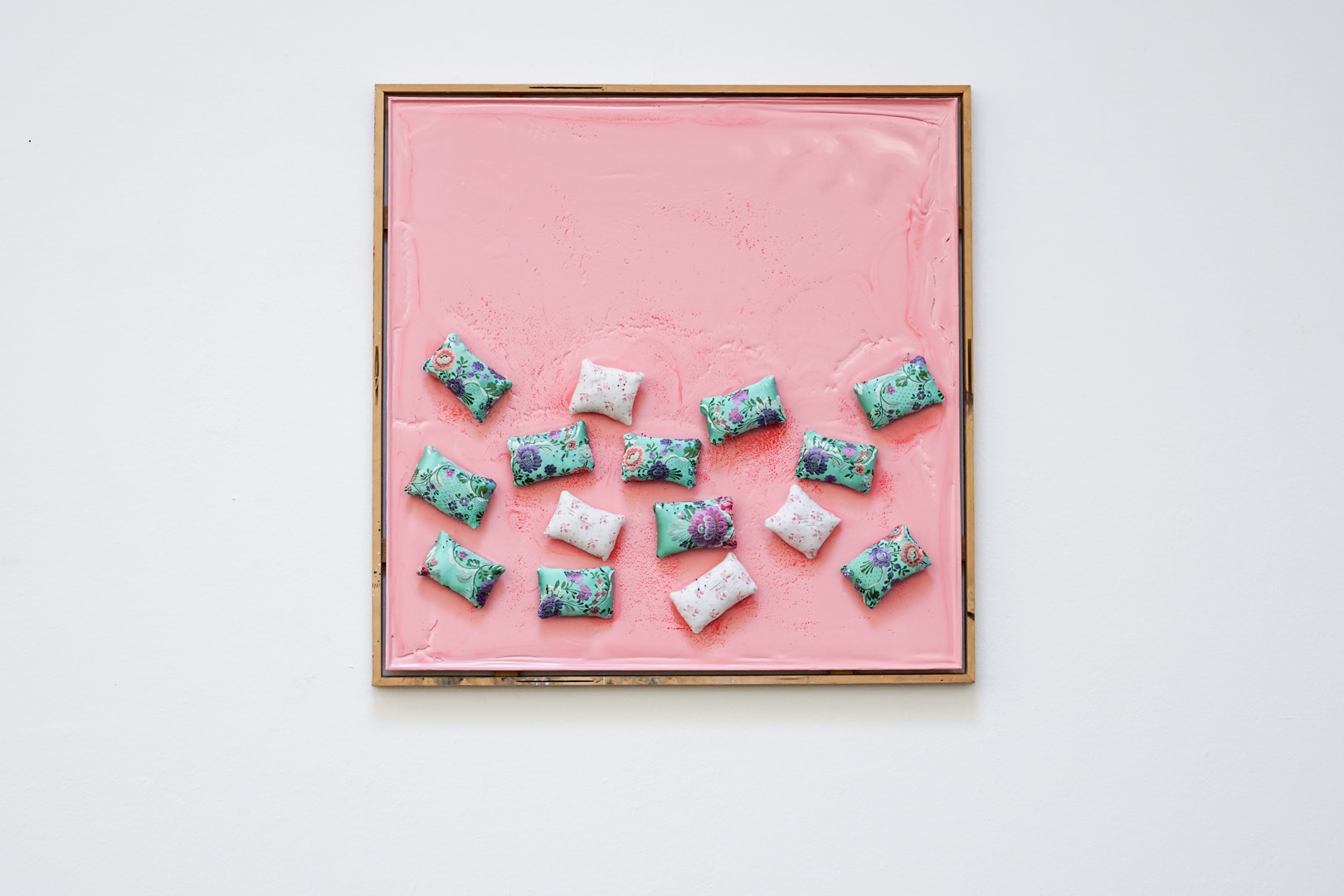
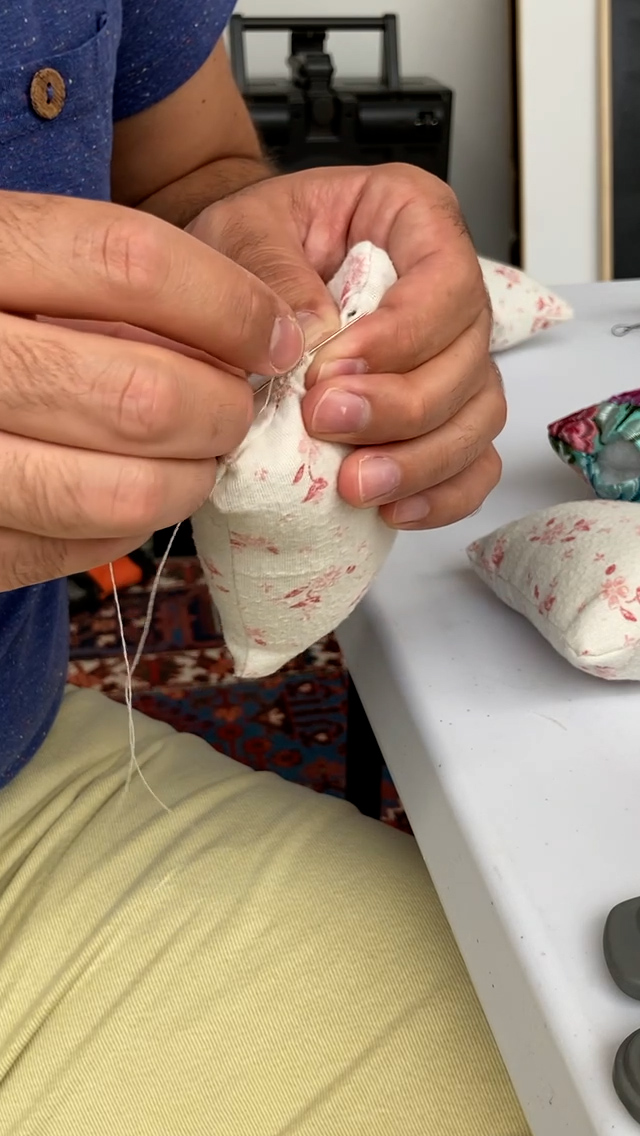
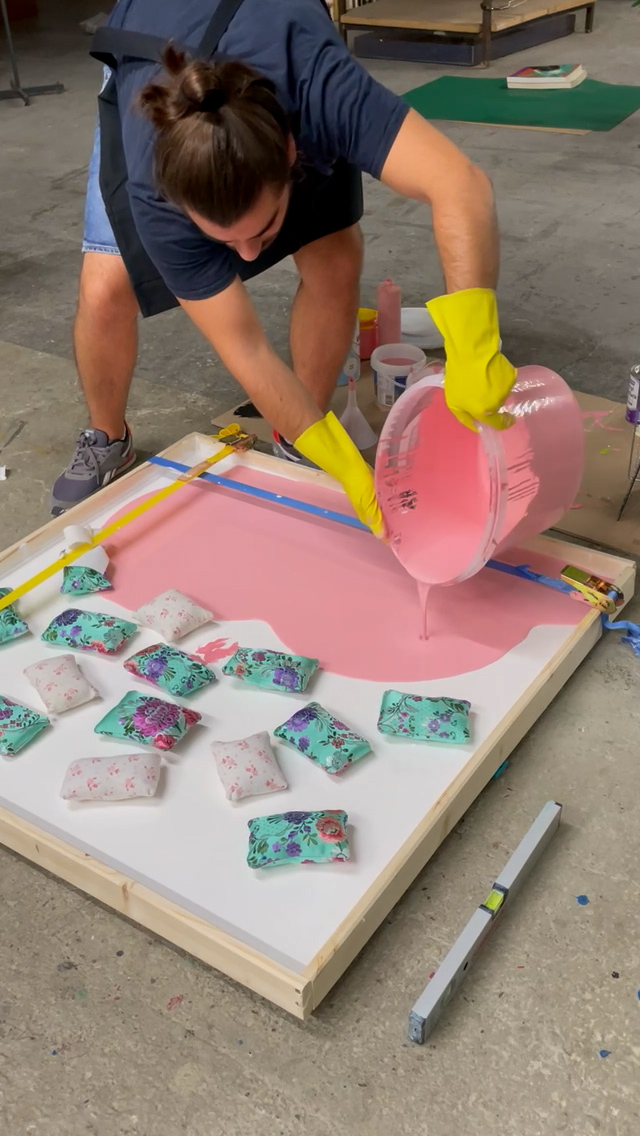
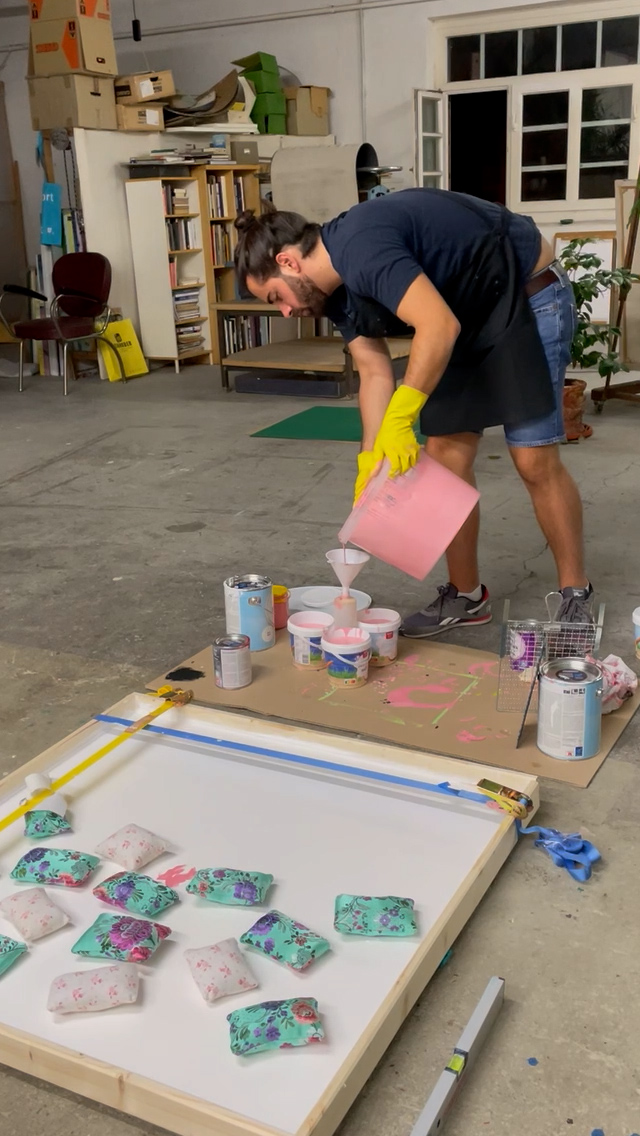
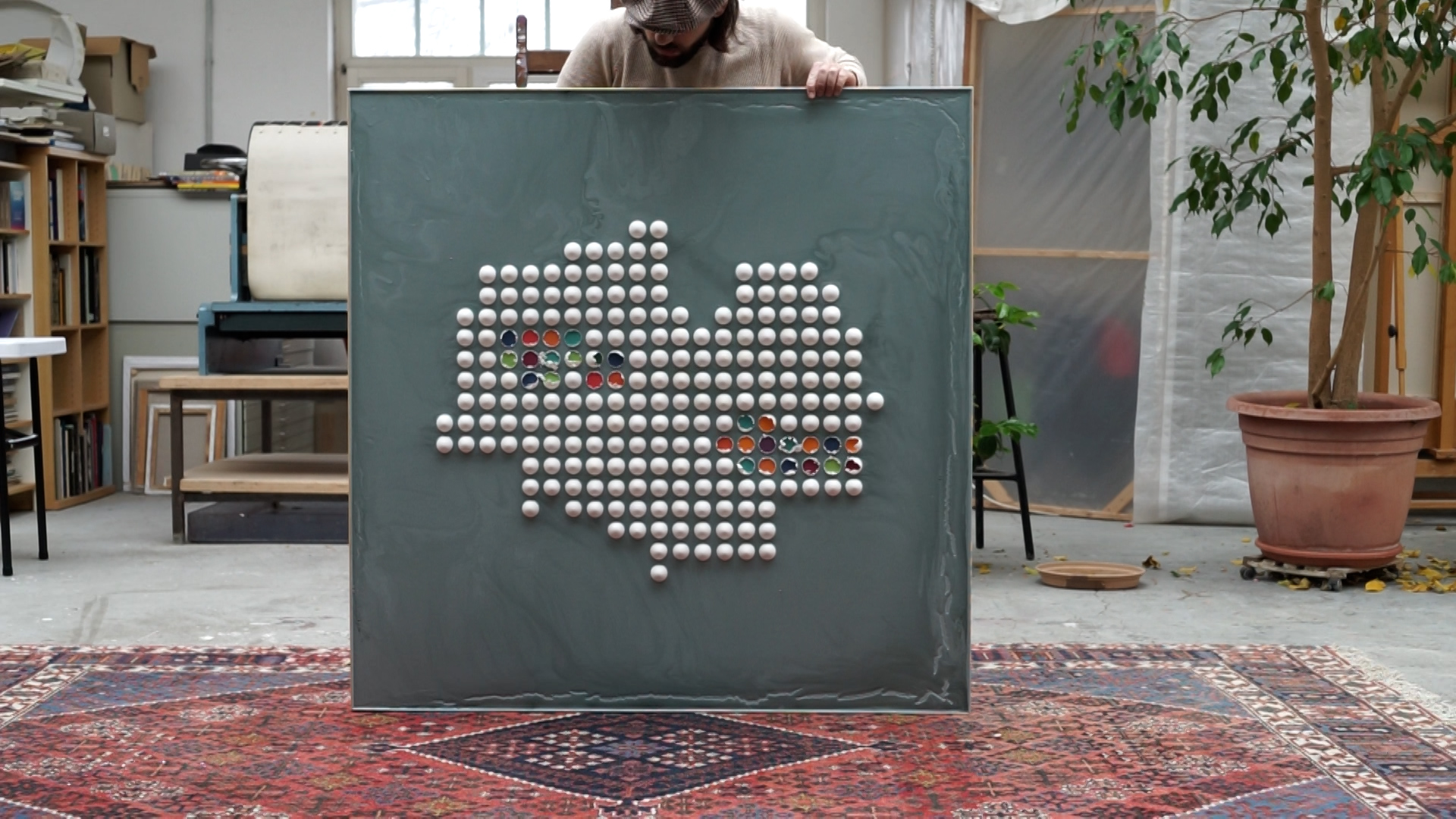
Work in progress of Reisfeld am Abend (Rice Field at Dusk) by Jesús Gómez
Over time, I came to understand that my parents never truly felt at home in Valencia. They had not felt accepted there, and that led them not to make great efforts to adapt. They had been waiting for the moment when work — or the lack of it — would allow them to return to Salamanca, where they believed they would finally feel comfortable. They passed on to me that sense of being only temporarily somewhere, which shaped my development and fostered the detachment that later proved so useful when I emigrated.
In the work Reisfeld am Abend (Rice Field at Dusk), for example, I play with the symbols that, for me, represent folkloric excess and my family’s failed attempt to adapt to Valencia. That same ironic and self-critical undertone runs through almost all my work, though I do not always channel it in such an explicitly personal way.
«That lack of roots and sense of cultural orphanhood makes the decision to emigrate or detach oneself from a place much easier.»
«It was difficult for me, and in some ways it still is, to empathize with the sadness of being far away from the place where one grew up.»
– When did you first become interested in art?
I came to art indirectly and almost by accident. I grew up in a social environment where what mattered was studying something and getting a job. Culture was not a passion but a means of making a living. Art seemed reserved for institutions like the Prado or the Louvre — something very distant from the life of an ordinary person. Contemporary art, meanwhile, was supposedly the realm of eccentric millionaires and their absurdities.
Despite this, I was deeply curious about art history. As a kid, whenever I was in Madrid, I would take every opportunity to visit the Prado. I would usually head straight to The Garden of Earthly Delights by Bosch. In that subversive work, I saw confirmation that not all art had to be so elitist.
As a teenager, I strongly identified with hip-hop culture: out of place, hungry for novelty, and widely rejected by elitist circles. At the time, hip-hop was still far from mainstream. Through it, I met people like myself — people who dared to engage in other sports than football and believed in alternative forms of expression.
After experimenting with different creative fields, and with emigration already behind me, I eventually became deeply interested in analogue photography. Equipment and materials in Germany were relatively affordable compared to Spain, and there was a very strong analogue photography culture. I ended up dedicating myself to it obsessively. The analogue, the tangible, offered endless possibilities, and I wanted to explore every single one of them.
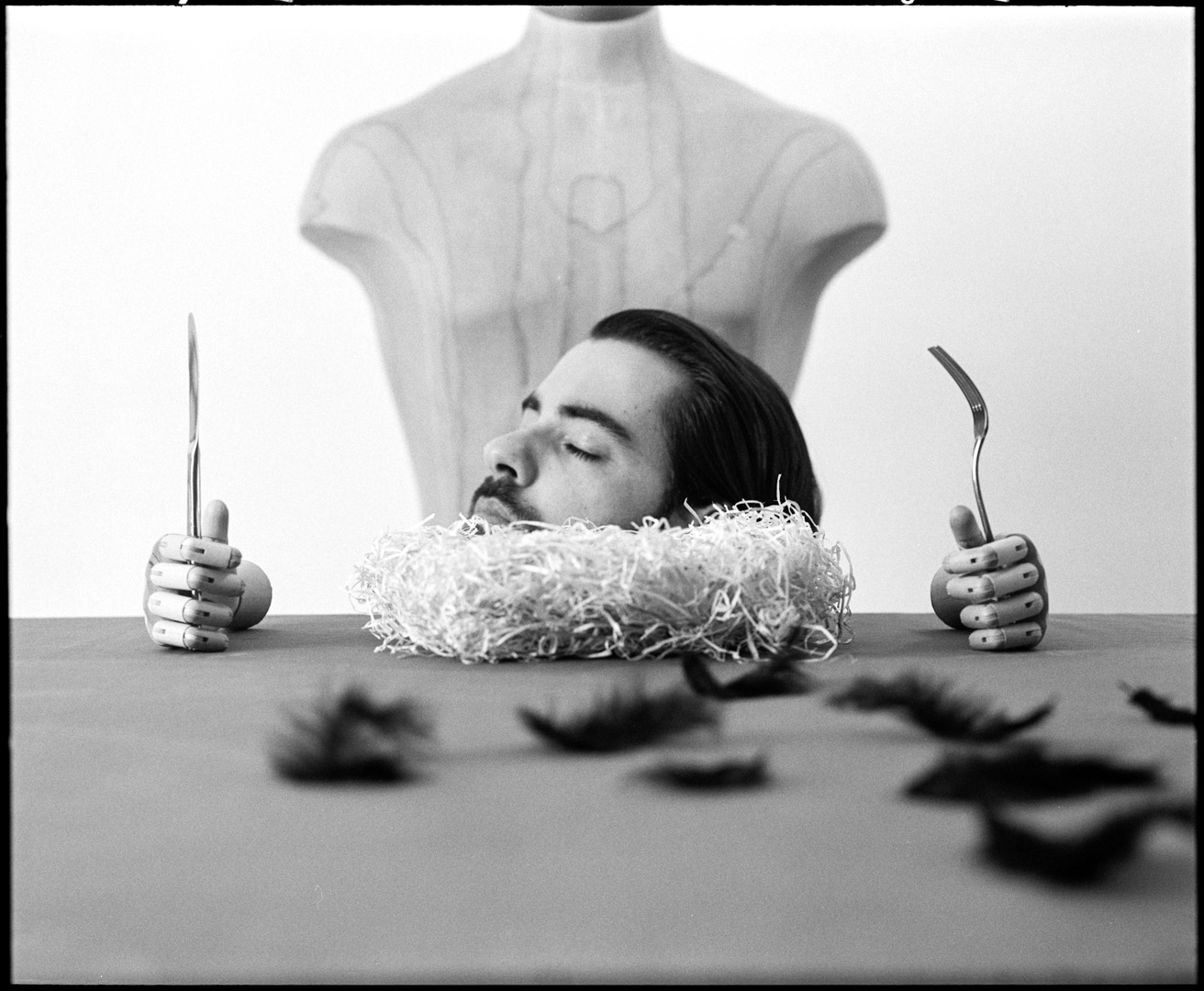
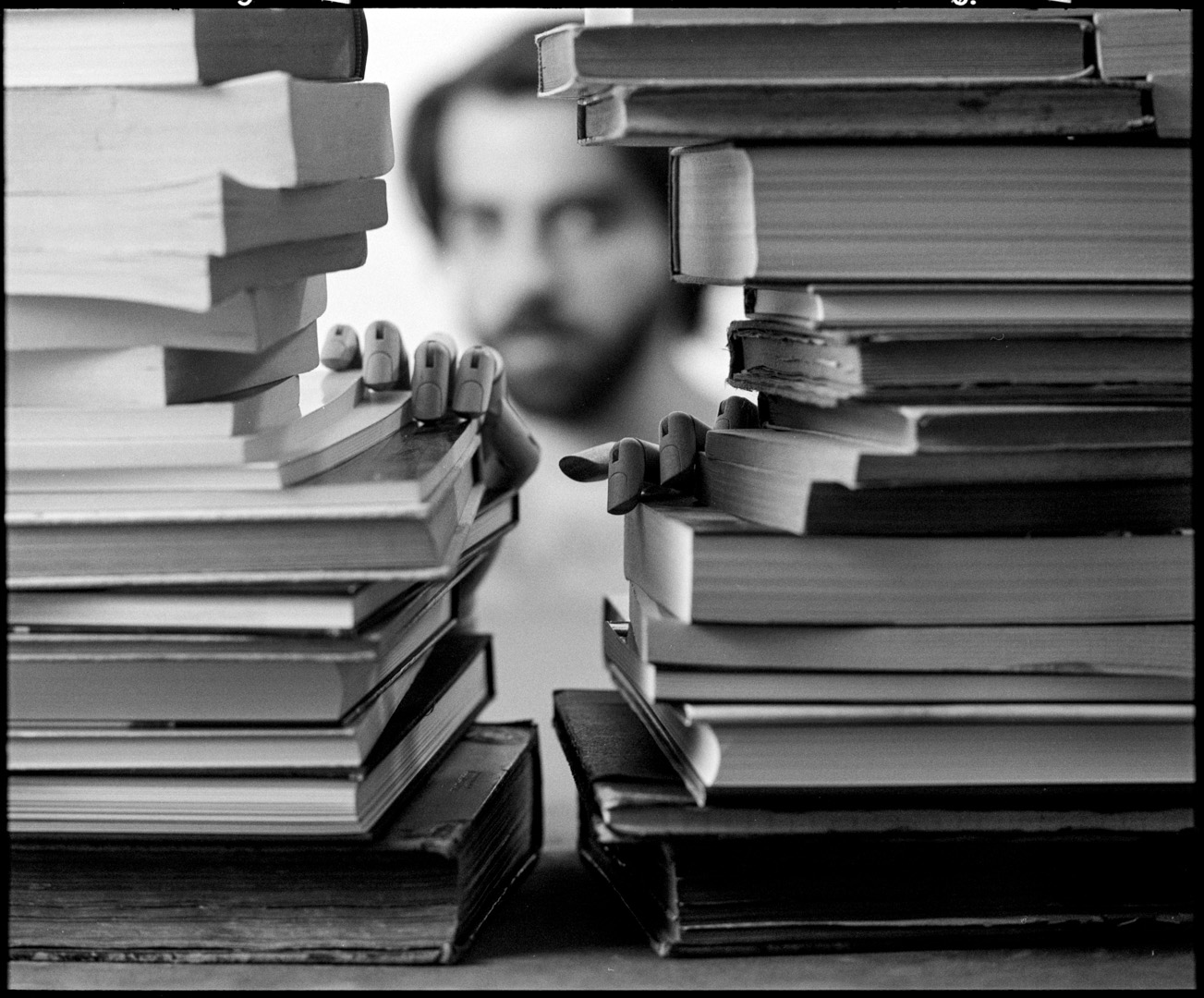
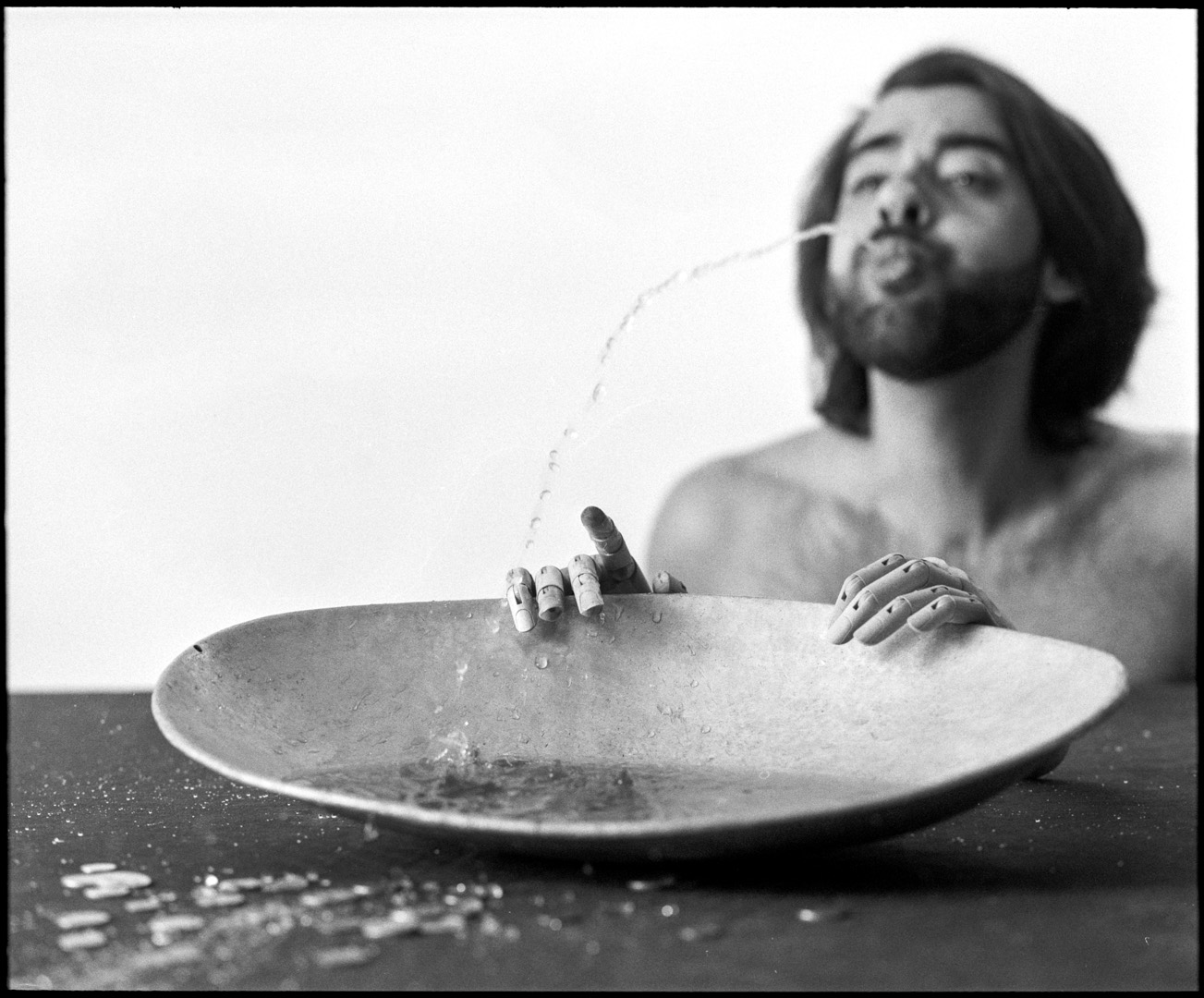
Photography was the perfect bridge between someone without artistic training and the world of art. A photographer is not automatically considered an artist, and photography enjoys much greater legitimacy as a commercial or professional activity. It is also easier to explain to people why you want to devote yourself to photography than to justify why you make performances or conceptual art installations. In that way, I avoided crossing the enormous psychological barrier that prevents so many people from defining themselves as artists.
Very quickly, however, the themes I explored and my work in series made it clear that I was moving closer to artistic practice than to any other genre. At the same time, photography as a medium was becoming technically insufficient for the kind of conceptual work I aspired to do, forcing me to work across other media.
Even so, for a long time I hesitated when explaining that I worked as an artist. I suppose I felt embarrassed, or perhaps I did not entirely believe it myself.
It was ultimately thanks to Hanover’s cultural environment — whose artistic scene I consider highly permeable and tolerant — and thanks to artist friends who supported me and believed in me — painter Pepa Salas Vilar played a decisive role here — that I was finally able to accept myself as an artist.
«After experimenting with different creative fields, and with emigration already behind me, I eventually became deeply interested in analogue photography.»
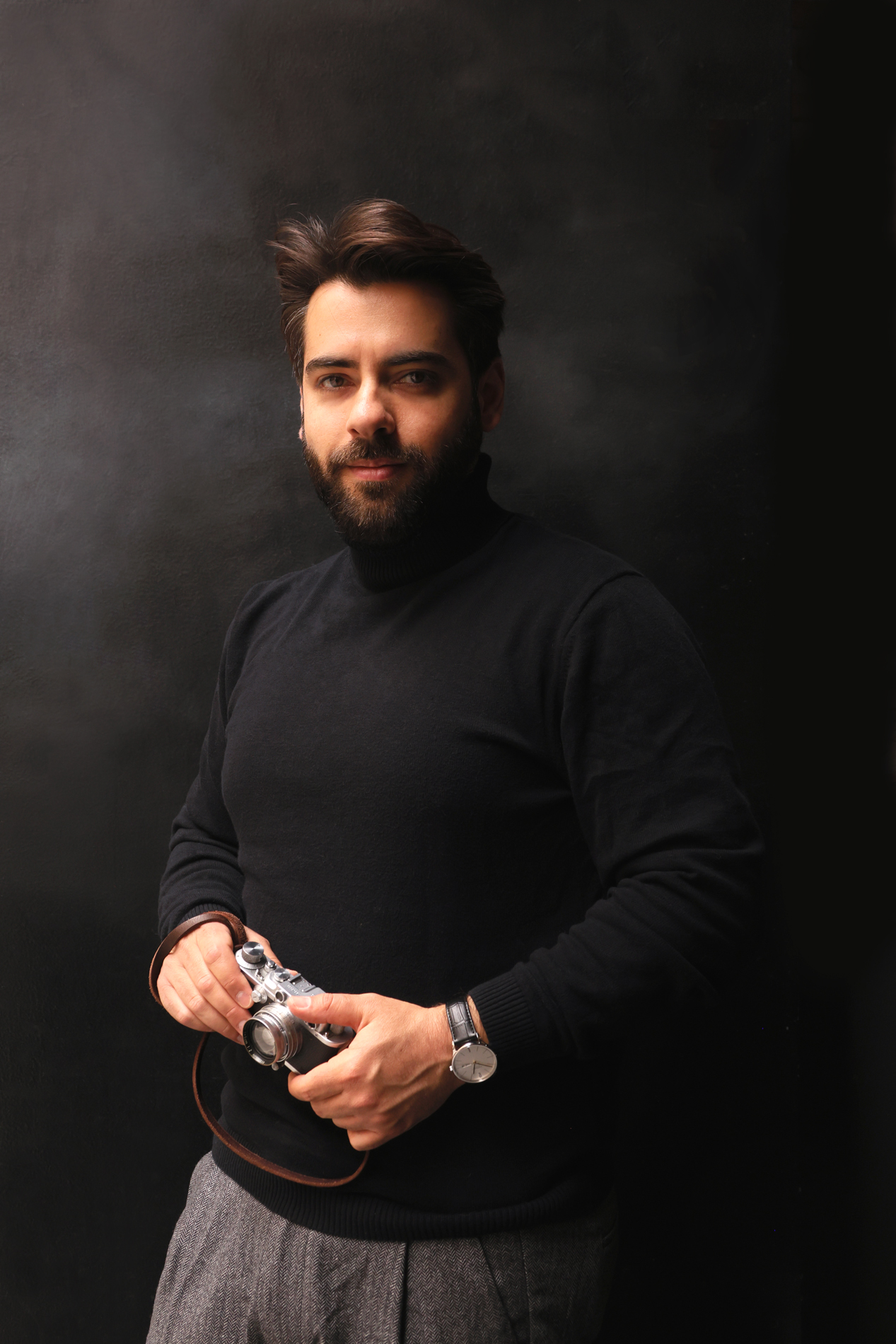
«Photography was the perfect bridge between someone without artistic training and the world of art. A photographer is not automatically considered an artist, and photography enjoys much greater legitimacy as a commercial or professional activity.»
– You work across different disciplines, from analogue photography to installation, video, and object-making. What motivates you to choose one medium or another for each work, and what is your creative process like?
For some time, I was afraid of multidisciplinarity and became quite a purist, dedicating myself exclusively to photography. Sometimes I would reject or alter an original idea simply because I was unable to communicate it through a purely photographic medium. That caused me a great deal of frustration. It felt wrong.
At some point, I understood that the purpose of the work had to prevail over the medium, and that if classical photography could not fully satisfy that purpose, then an alternative had to be chosen. This shift was reinforced by series in which the objects or structures created to be photographed ended up becoming more significant than the photograph itself.
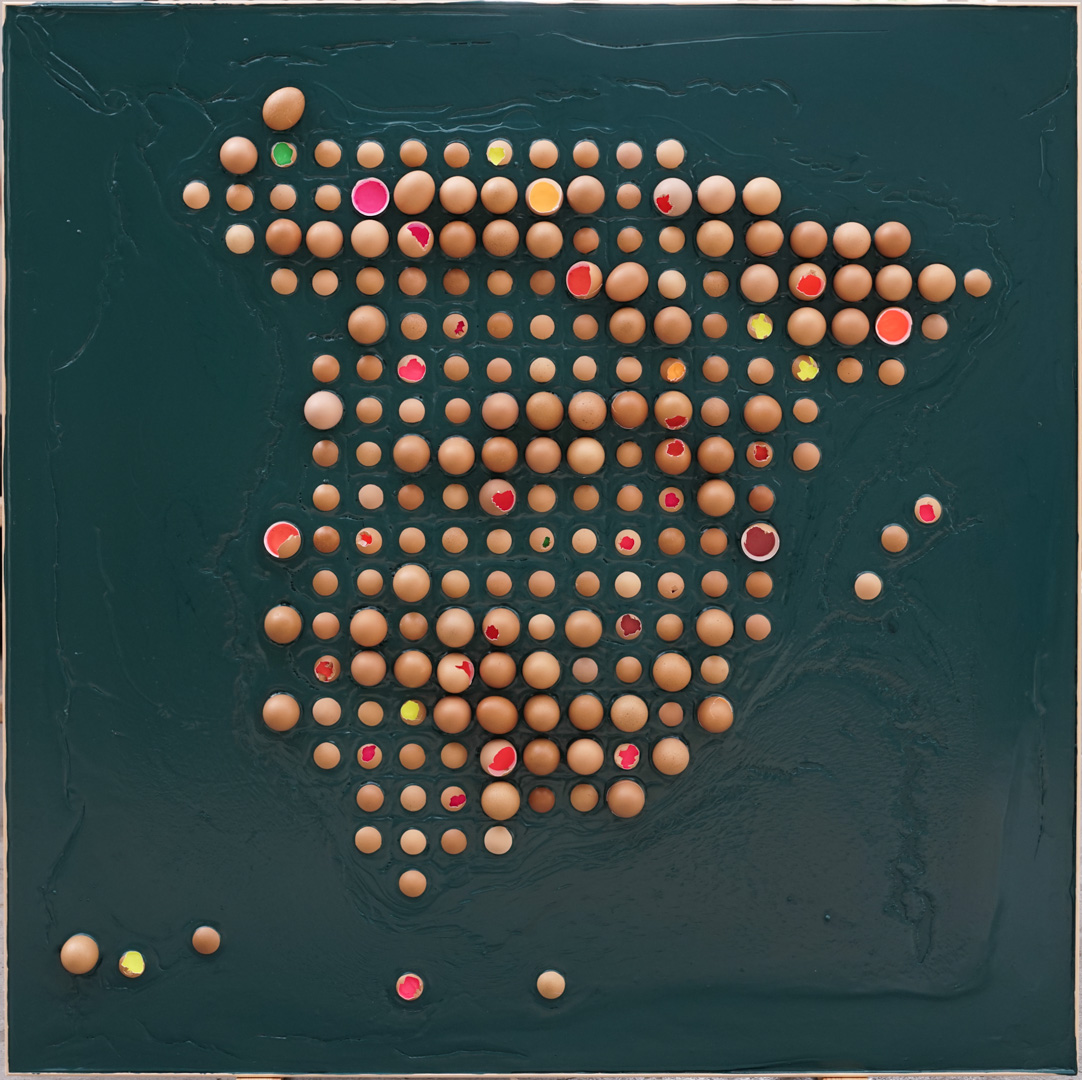
The work Sollbruchstellenverursacher* (Maker of predetermined breaking point) marked a turning point. I spent a couple of years working on a structure made of eggshells designed to produce very specific effects within the photographic image. Once the object was completed, however, it conveyed the irony of the work far more powerfully than the Polaroids that resulted from it.
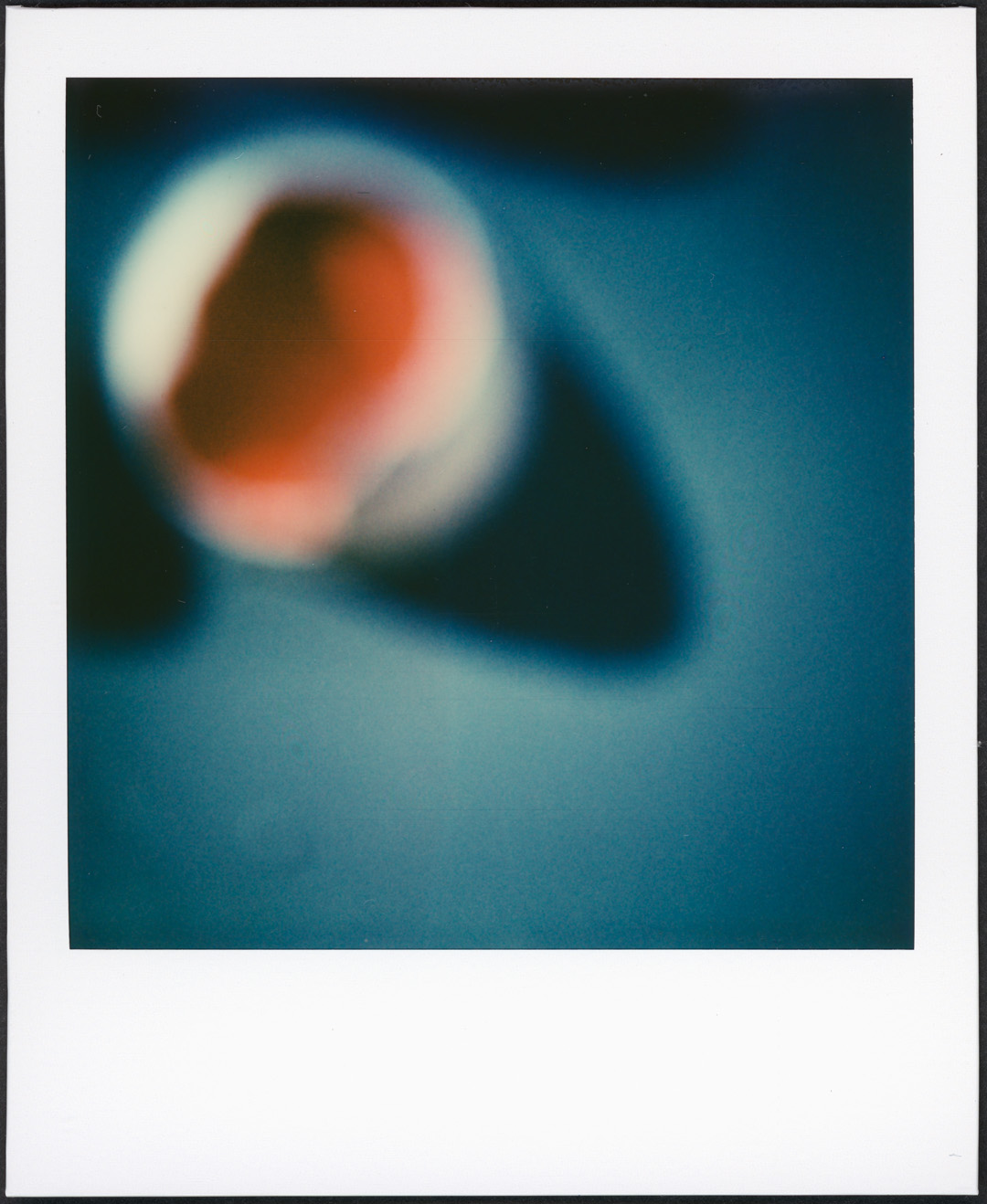
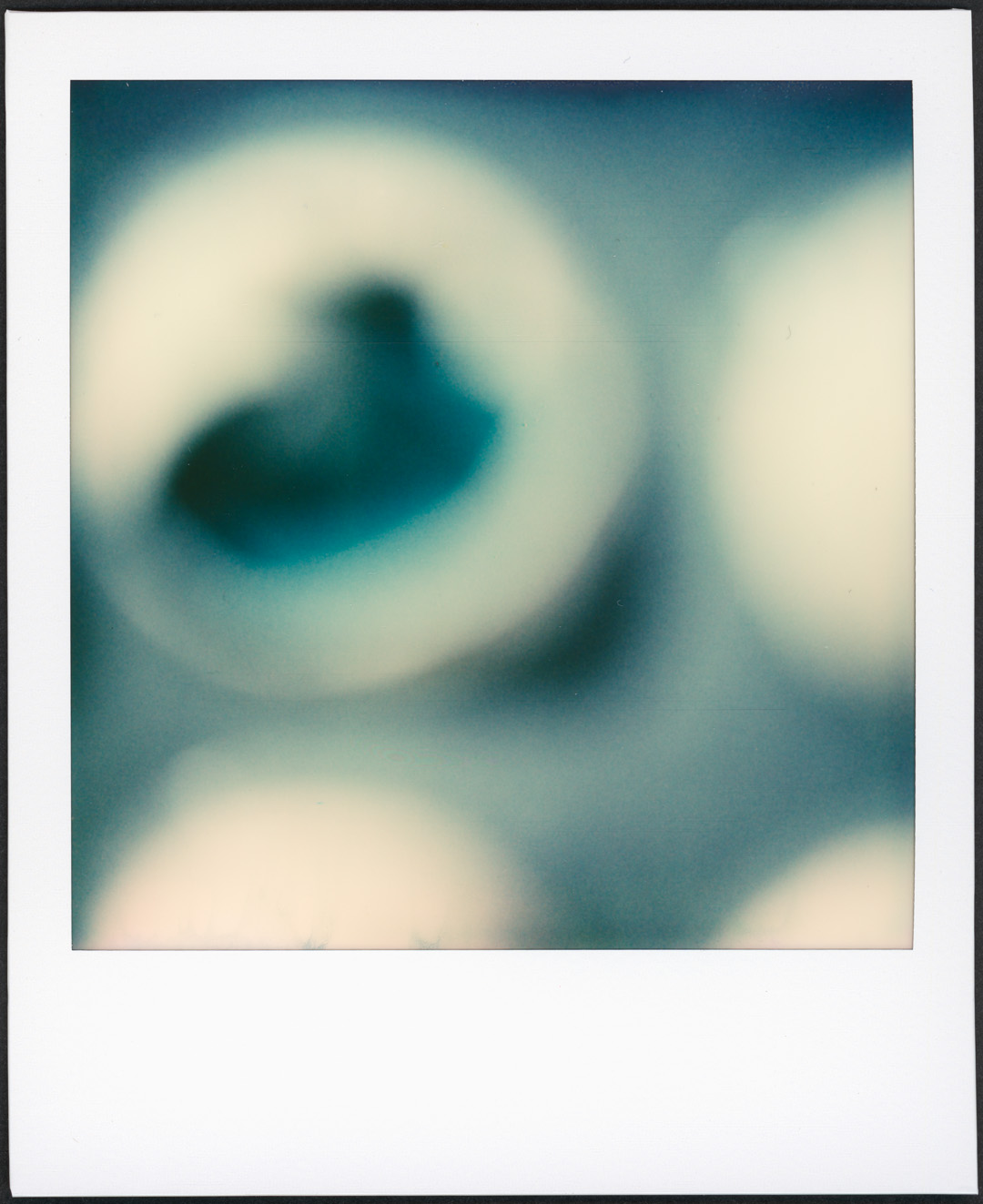
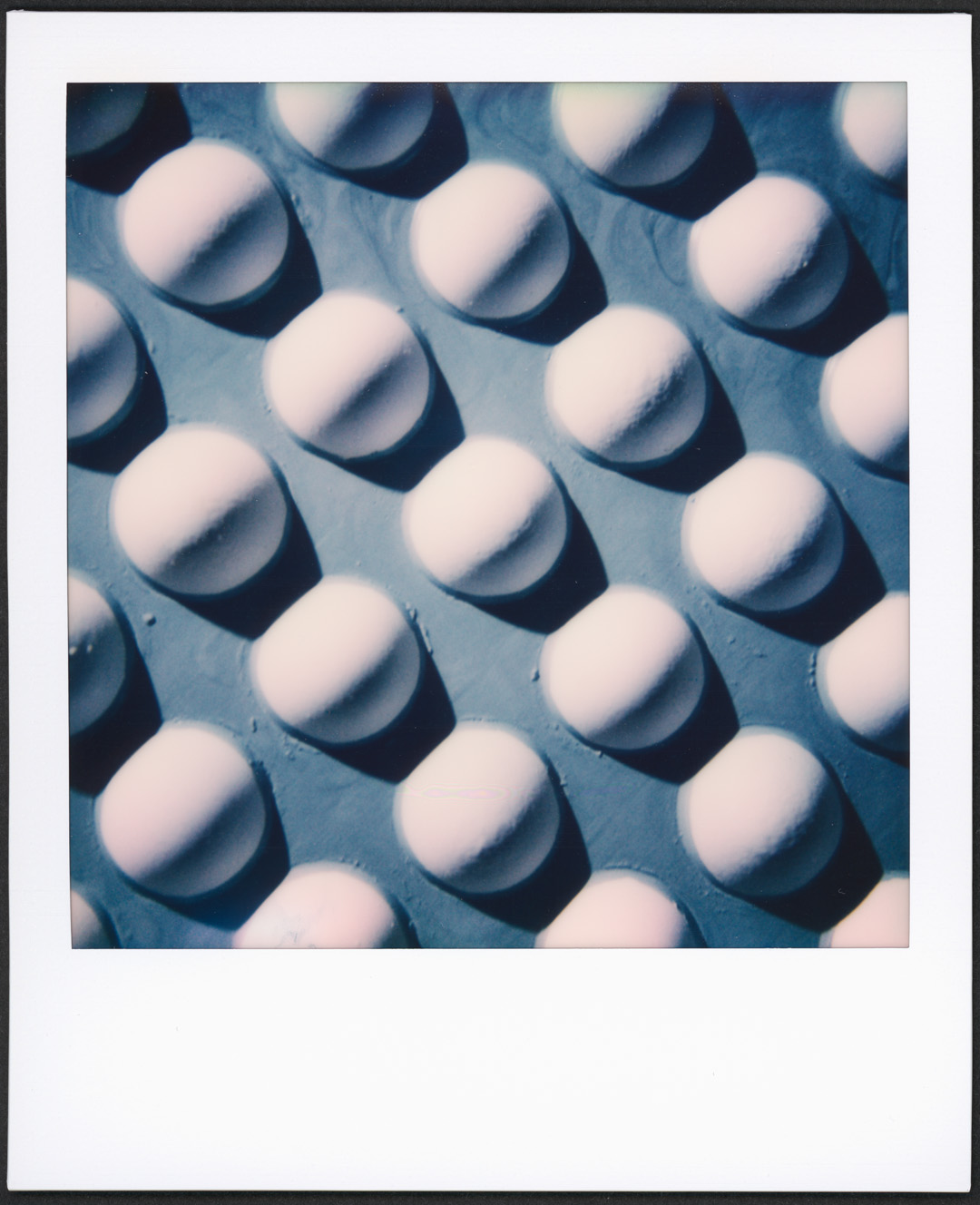
Polaroid photographs from the Sollbruchstellenverursacher project (Maker of predetermined breaking point) – Jesús Gómez

From that moment on, I gave myself permission to use the camera as only one part of the process — or to let it rest entirely until the next project in which it was truly needed.
My creative process is simple: at some point, an idea arrives — a trigger. At first, it is usually shapeless, confusing, without substance. If the idea is strong enough, it keeps burrowing into my mind, generating a kind of anxiety. It gradually takes form through notes, sketches on paper… During that process, it becomes clear which is the best medium to match the nature of this work.
If the idea is demanding — and they usually are — I first have to research and experiment with materials and formats, making one mistake after another before finding the right formula. Sometimes I leave the studio slamming the door behind me and spend the entire day obsessing over a possible solution. I can spend days running tests or discarding alternatives. And then, occasionally, just before falling asleep, in the shower, or while skating, a solution occurs to me — as improbable as it is obvious. If this “moment of illumination” arrives while I’m already in bed, I spend the night wired, thinking about how to put it into practice. Once I get to the studio and begin working, there’s no schedule: I work until my body gives out, or until I run into another seemingly impossible problem.
Once the work is finished, my mind rests at first — and then grows restless again, searching for the next challenge.
«My creative process is simple: at some point, an idea arrives — a trigger. At first, it is usually shapeless, confusing, without substance. If the idea is strong enough, it keeps burrowing into my mind, generating a kind of anxiety.»
«And then, occasionally, just before falling asleep, in the shower, or while skating, a solution occurs to me — as improbable as it is obvious. If this “moment of illumination” arrives while I’m already in bed, I spend the night wired, thinking about how to put it into practice. Once I get to the studio and begin working, there’s no schedule: I work until my body gives out, or until I run into another seemingly impossible problem.»
– You describe your work as autobiographical, but also deeply concerned with society and identity as central themes. What do these works reveal about you and your place in the world?
I think many artists are disgusted by social issues on a daily basis, but approach them from a more personal rather than public perspective. First, I need to understand what a particular problem, event, or injustice provokes in me, in order to return it to the outside world filtered through my insignificant point of view — which is, paradoxically, the only point of view that matters while you are looking at my work.
It is like one of those conversations at a bar where you and I solve the world’s problems: in that moment, in that place, only your opinion and mine matter. Perhaps we solve nothing, and perhaps you go home relieved — or even more furious — but not indifferent.
What matters is that this conversation takes place with every person who stands in front of the work, again and again. I do not know whether people will leave the exhibition space feeling relieved or not, but I will have achieved my goal if they do not remain indifferent. That is my small contribution to the world.
Identity, meanwhile, is a fascinating subject: subjective, malleable, confusing, dangerous. We use identity to avoid feeling alone, to belong to a group — but also to crush others, like a weapon that changes hands.
There is an immense amount left to explore around identity. And while we dissect the concept and its creative and destructive features, we move through life trying to find our own identity — and probably never truly finding it.
We are destined for identity failure, and I think that this is fantastic.
«First, I need to understand what a particular problem, event, or injustice provokes in me, in order to return it to the outside world filtered through my insignificant point of view — which is, paradoxically, the only point of view that matters while you are looking at my work.»
«I do not know whether people will leave the exhibition space feeling relieved or not, but I will have achieved my goal if they do not remain indifferent. That is my small contribution to the world.»
– Humour and irony — sometimes tinged with bitterness — are very present in your work. What drives that perspective in your creative practice?
I think this is directly connected to my personality. I complain a lot, I get angry very quickly, and I criticize everything — myself included. I use that dissatisfaction as a way of trying to change the things I dislike, whether in myself or in the world around me.
Irony and mockery are engines that allow all of this to move in a less painful way.
As we grow older, we learn that irrational anger leads nowhere good. A touch of irony and humour, on the other hand, can make existence a little more bearable.
I admire artists like the singer Nacho Vegas, who, without losing either their critical edge or their sense of hope, are able to explain perfectly that the world is terrible and that life hurts.
– You are currently incorporating found photographs from flea markets, etc. into your work. What is it like for you to work with images of unknown people, and how do you integrate them into your practice?
There is something absolutely fascinating about gaining access to other people’s memories. I experience memory as something fragile and precious that must be preserved at all costs.
This feeling becomes especially intense when I come across photographic archives that not even the person who used the camera had the chance to see before passing away. I have been collecting cameras for many years and, sometimes, when a camera comes into my hands, I find a half-finished roll of film inside. In this roll is someone’s unfinished work.
At other times, I get the cameras along with an entire arsenal of albums, negatives, or undeveloped film rolls. When I find this orphaned memory, it truly shakes me. I feel responsible for preserving those experiences, as though I owed something to the person who spent their life documenting everyday moments through photography, just as I do today.
«There is something absolutely fascinating about gaining access to other people’s memories. I experience memory as something fragile and precious that must be preserved at all costs.»
«I feel responsible for preserving those experiences, as though I owed something to the person who spent their life documenting everyday moments through photography, just as I do today.»
Very often, those rolls of film have deteriorated with time, and the memories they contain vanish forever. At other times, the images are still visible — perhaps damaged, but surviving: a newly purchased home, holidays in the Canary Islands, a brand new coat, a trip to Paris, or an excursion into the snow.
They are ordinary moments from a time when every photograph was expensive and the number of images one could take was extremely limited. Those people decided that this particular moment — and not another — was special, and they invite the viewer share in their excitement.
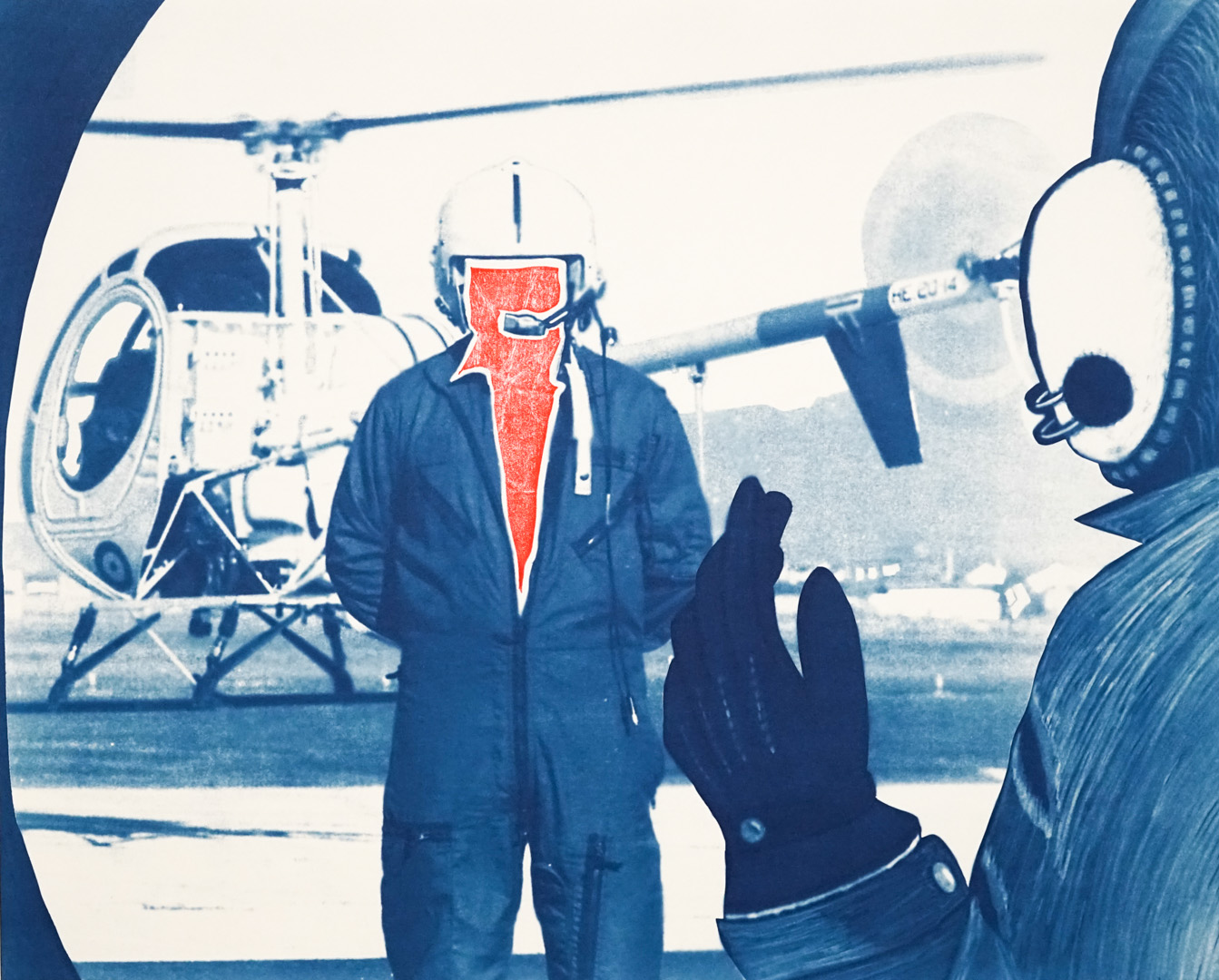
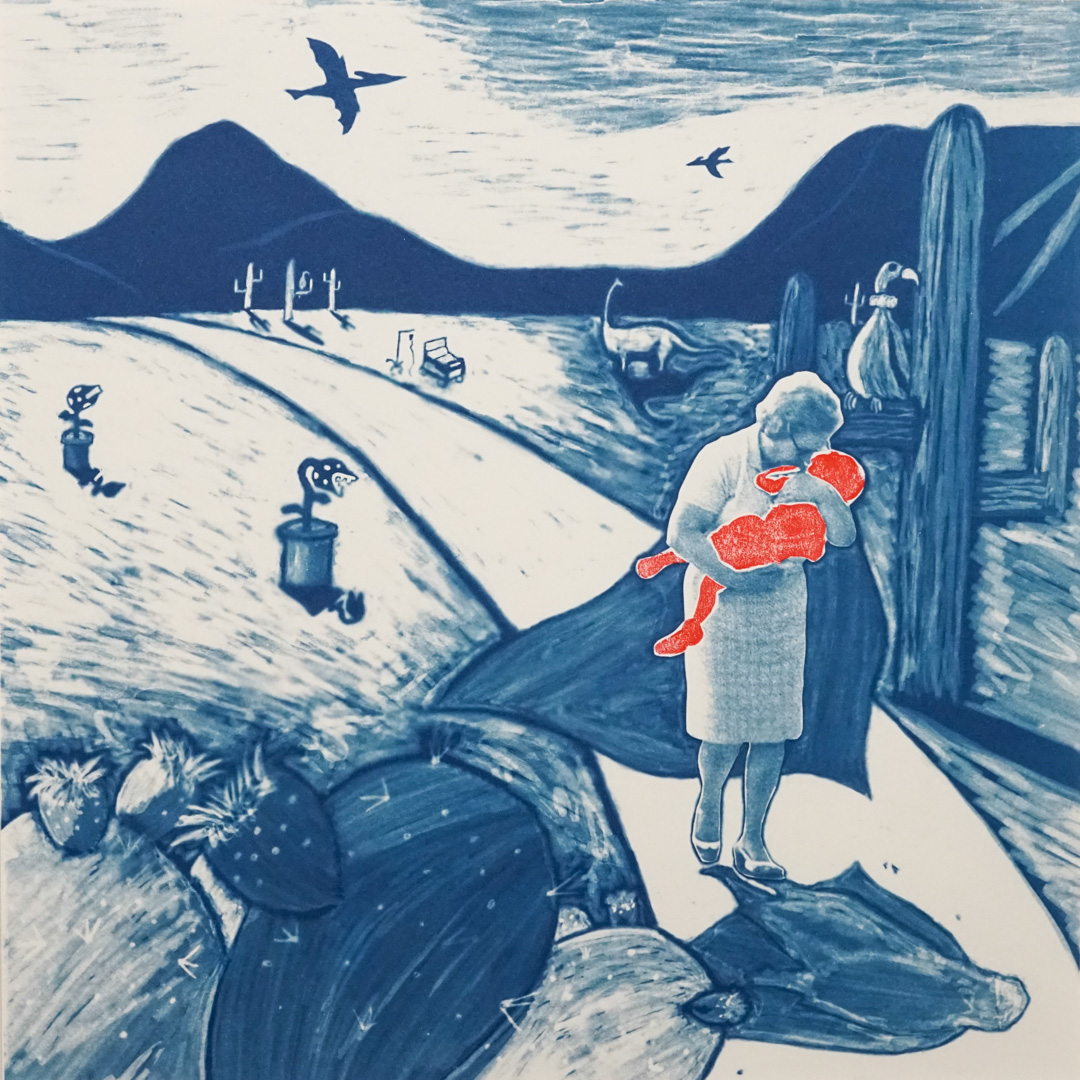
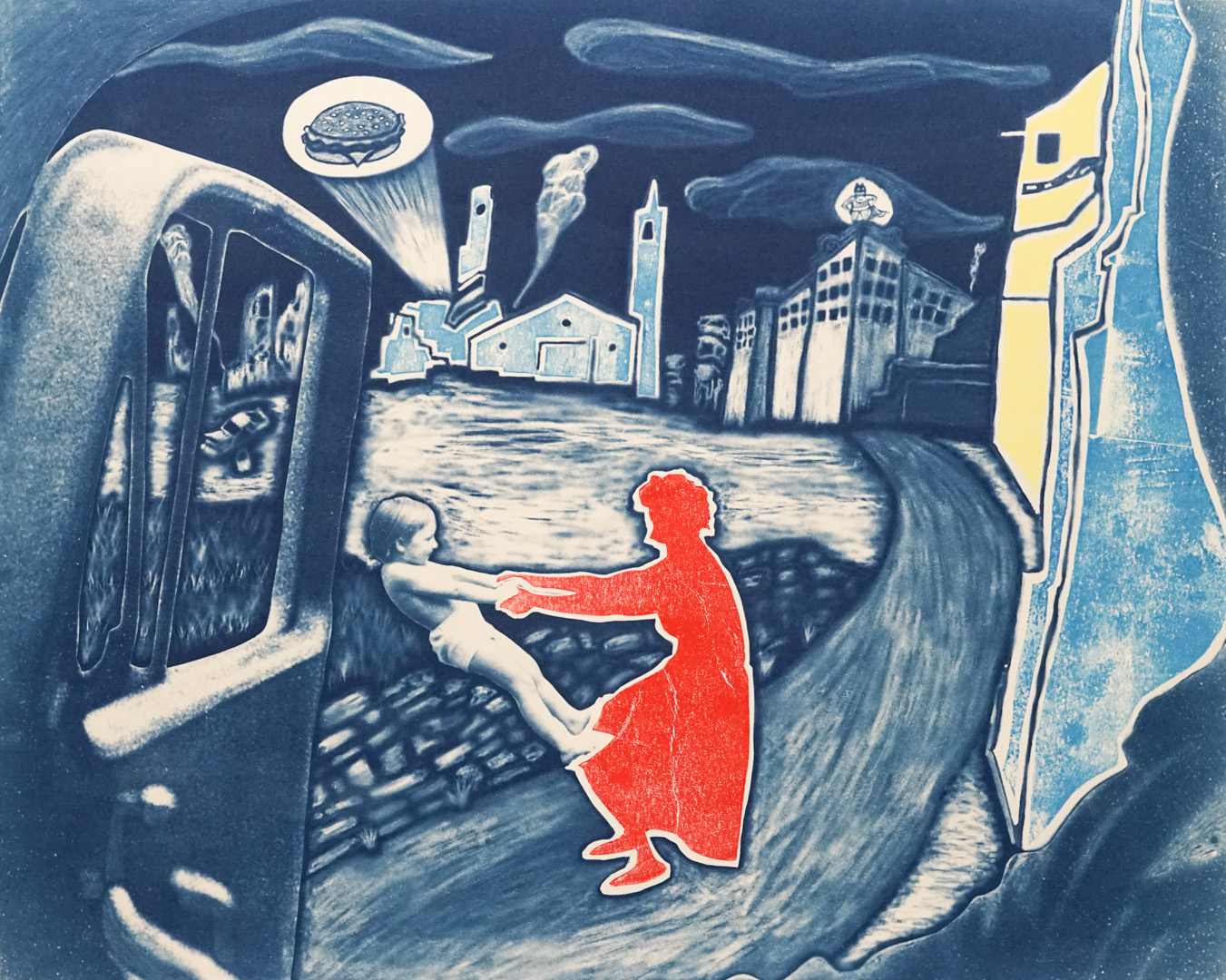
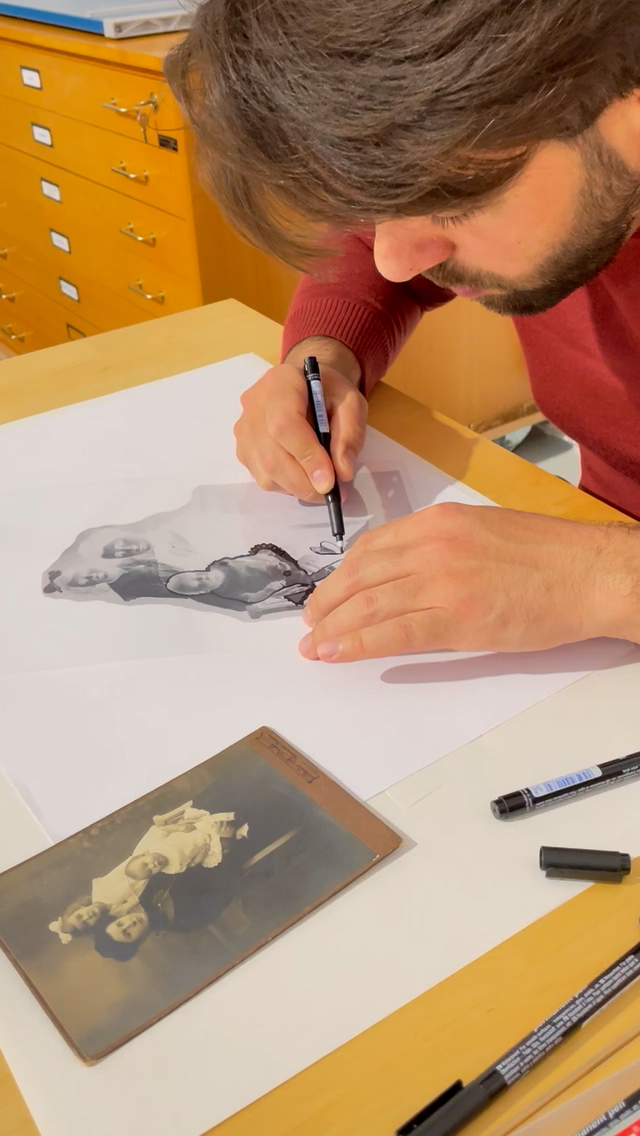
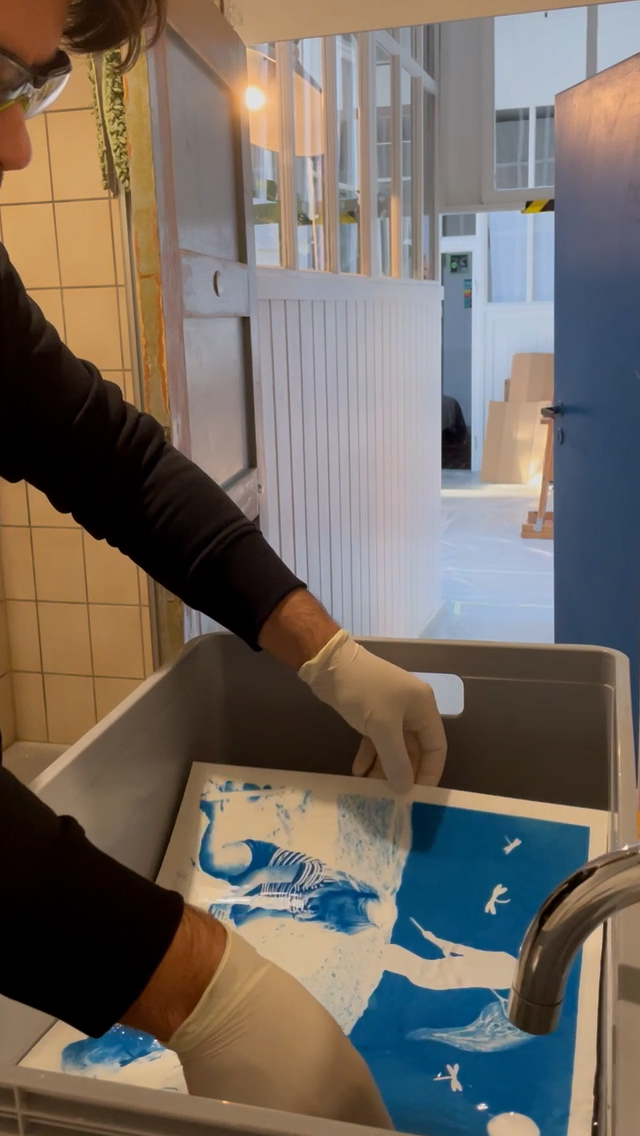
In the series Ausencias (Absences), I use some of these photographs as a starting point to construct a story in which a character is missing. They are fictional, altered memories —much like childhood memories, in which details become exaggerated or erased.
Within those memories there is always an element of loss, of longing. What is absent, what we cannot see, suddenly becomes more relevant than what remains present.
– Your work has been shown primarily in Germany, in private galleries and public exhibition spaces. How is the impact of your work, and what kind of collectors acquire it?
Responses to my work are very varied. My practice prioritises conceptual weight over a purely aesthetic reading, and it requires a certain amount of time to uncover what lies beneath the initial impression. Viewers do not always have the time or the energy to engage with it more deeply.
There is, however, a very specific type of collector who actively seeks the story behind the artwork — someone who is drawn precisely to more challenging works, to conflict.
I enjoy the idea that people can stand in front of one of my works and debate whether it is incredibly absurd or remarkably accurate — that they fail to agree and yet are equally right.
I think that is part of the game.
«My practice prioritises conceptual weight over a purely aesthetic reading, and it requires a certain amount of time to uncover what lies beneath the initial impression.»
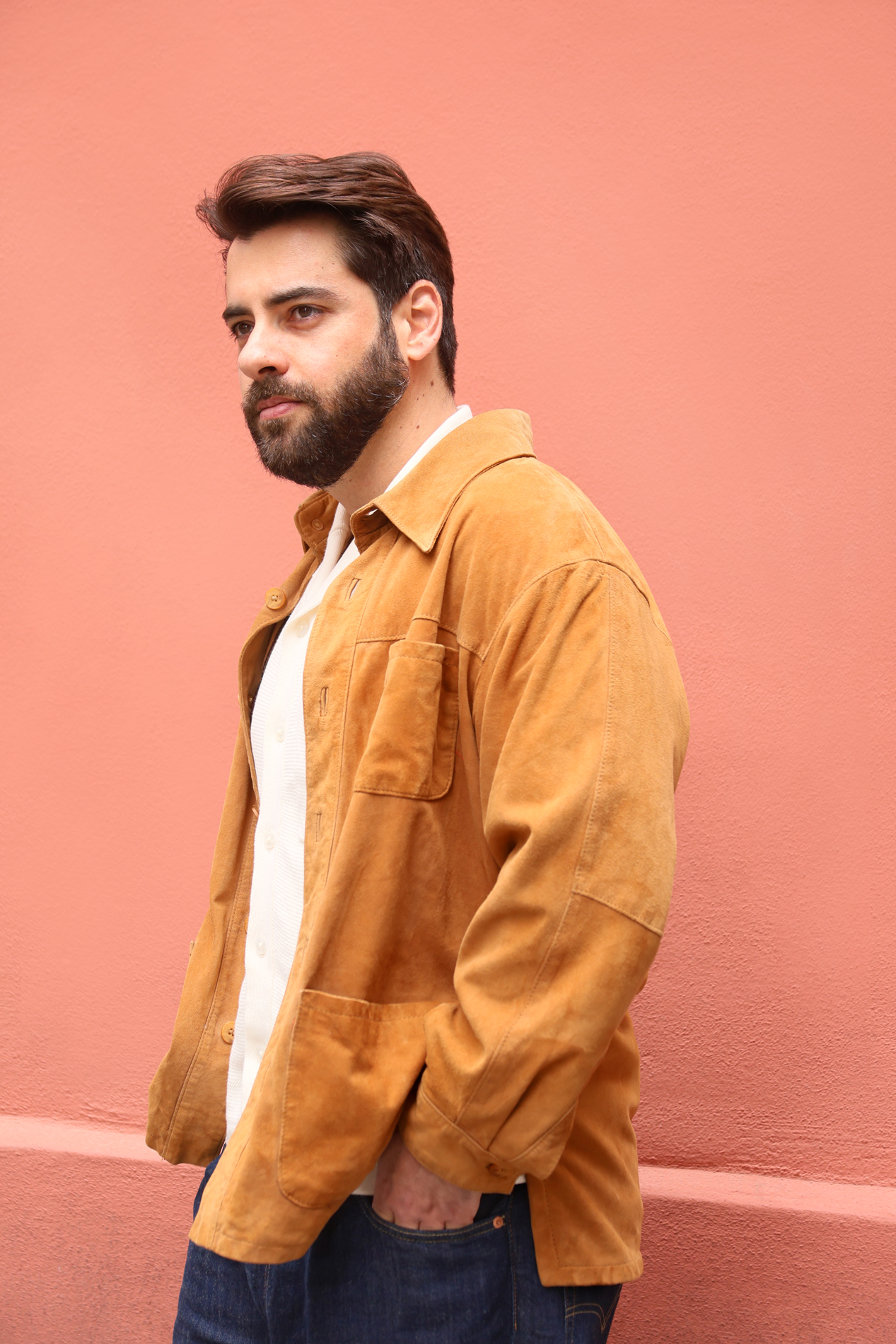
«I enjoy the idea that people can stand in front of one of my works and debate whether it is incredibly absurd or remarkably accurate — that they fail to agree and yet are equally right.»
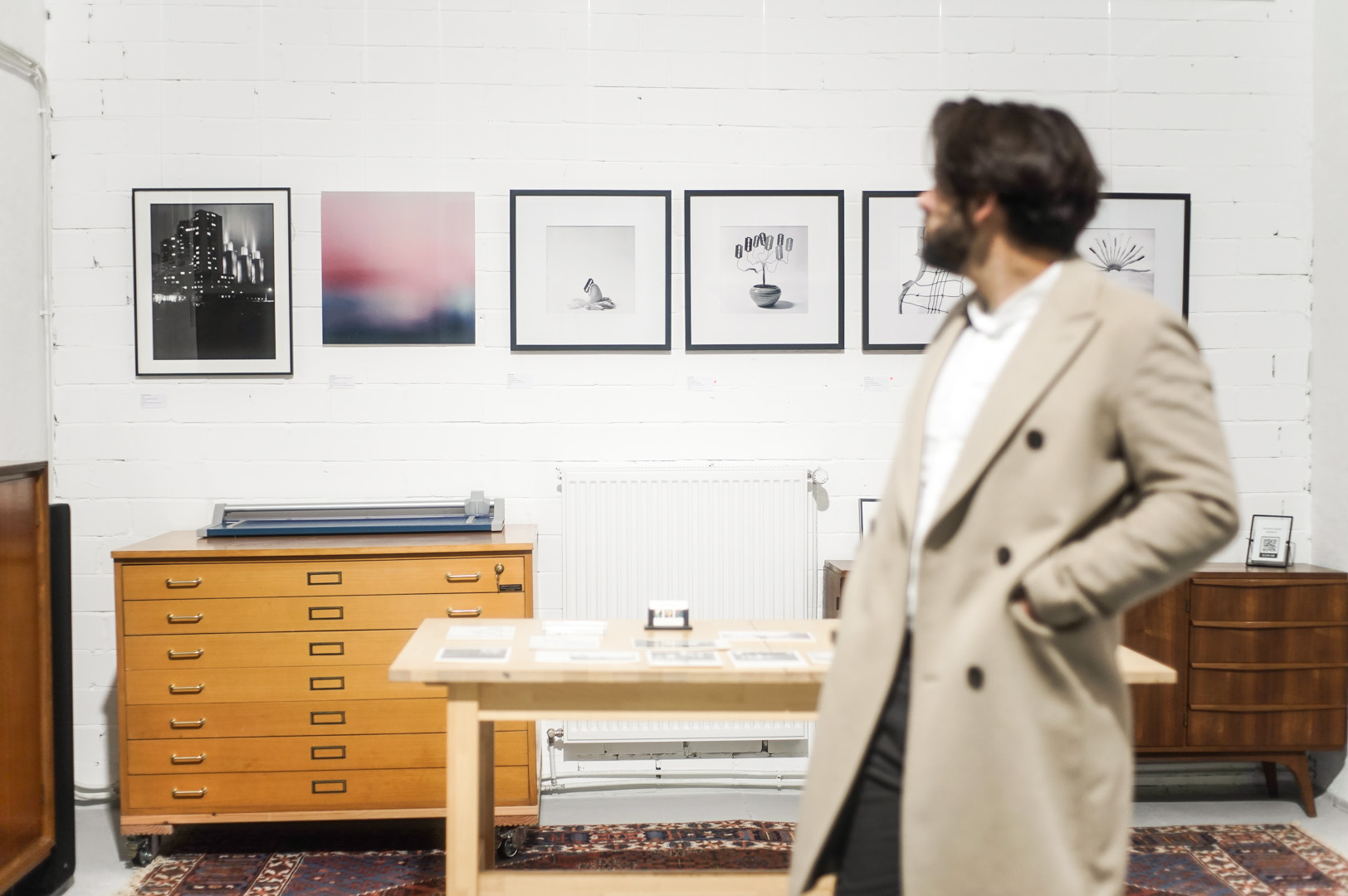
– In the studio-gallery you share in Hanover with artist Katrin Hamann, you organize international open calls for artists. How did you become cultural managers and how do you develop this work?
Both Katrin and I had separate studios before this project, and we shared one conviction: a belief in the importance of making art accessible, in collaboration between artists and cultural agents, and in actively promoting our own work.
Each of us organized exhibitions in our respective studios, regularly inviting other artists to participate. Hanover is a relatively large city, but within the artistic niche everyone knows each other. I had exhibited in her studio, and she in mine.
Katrin — whose drive and energy are remarkable — wanted to push this idea further. For that purpose, she secured an extraordinary building, which she began renovating largely with her own hands. In doing so, she founded Hannover Art Connecting. Her vision was to use it both as a project space and as a studio for herself and another artist.
I joined the project later and moved my own studio there.
We organize around four to five events each year. Sometimes artists approach us independently with exhibition proposals. Sometimes, we launch open calls or directly invite participants.
The initiative began in 2024 and has been very warmly received. It gives us enormous joy to see how our environment — and even our own artistic practices — become enriched through collaboration with other artists, and to witness how positively neighbours and visitors respond to the exhibitions we organize.
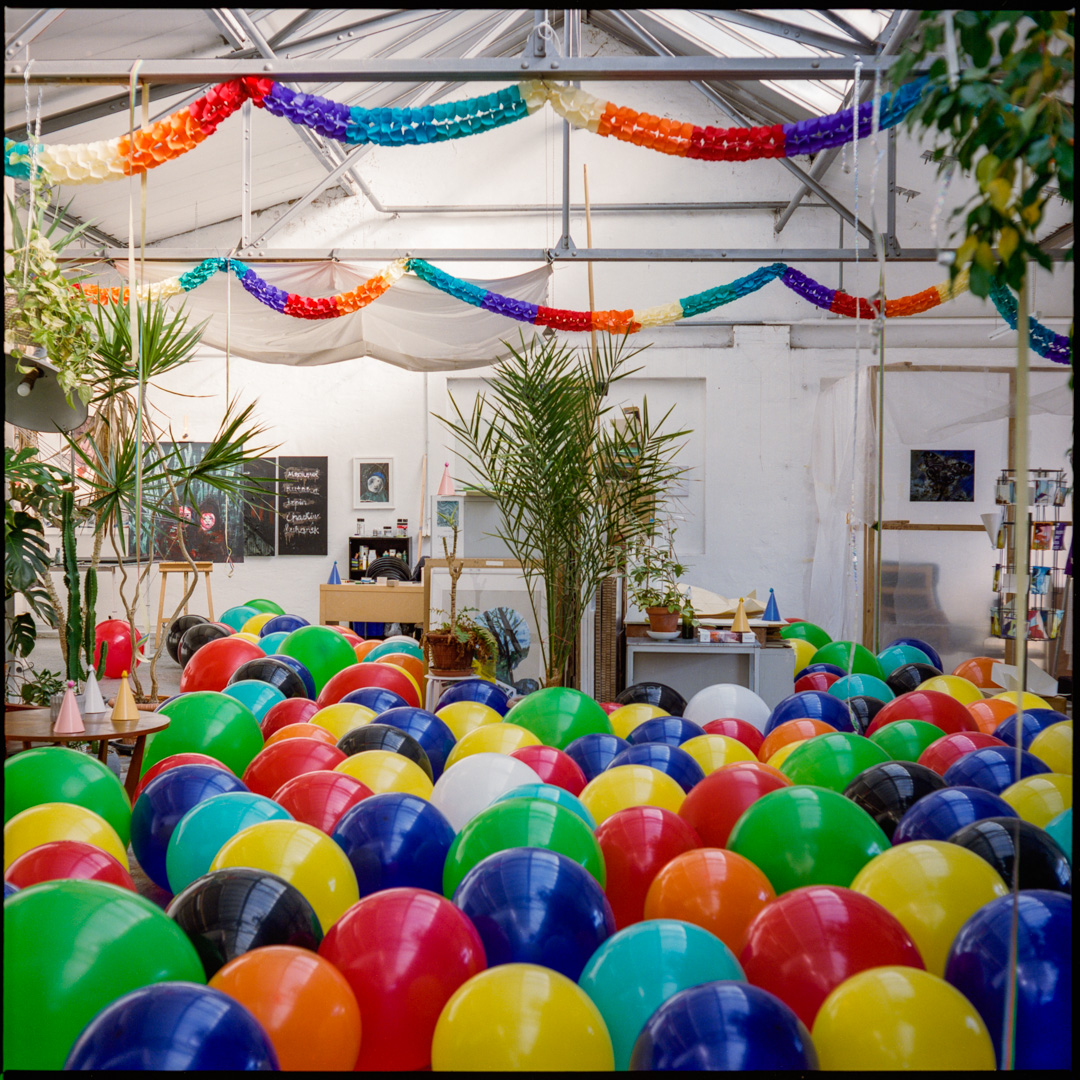
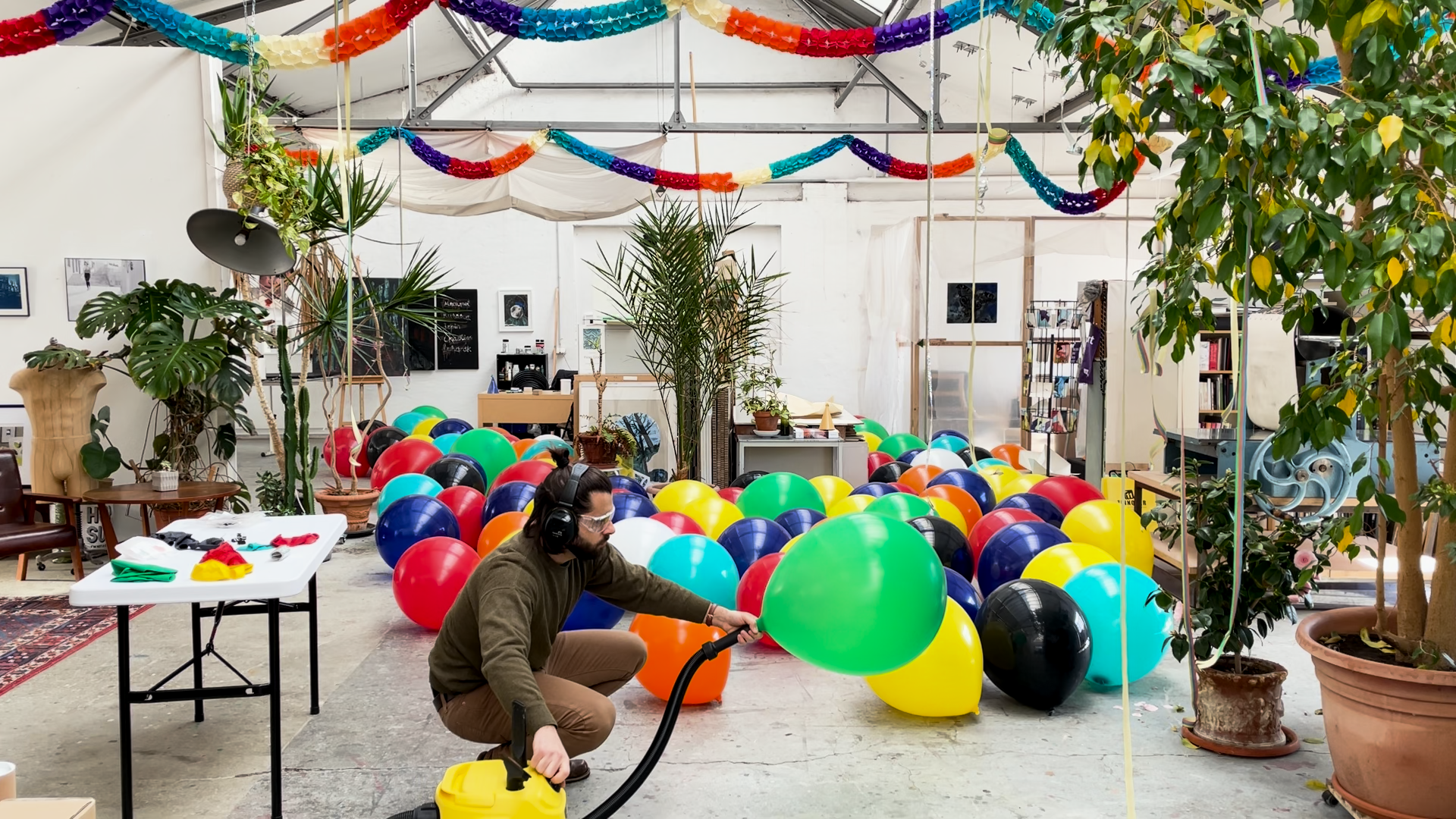

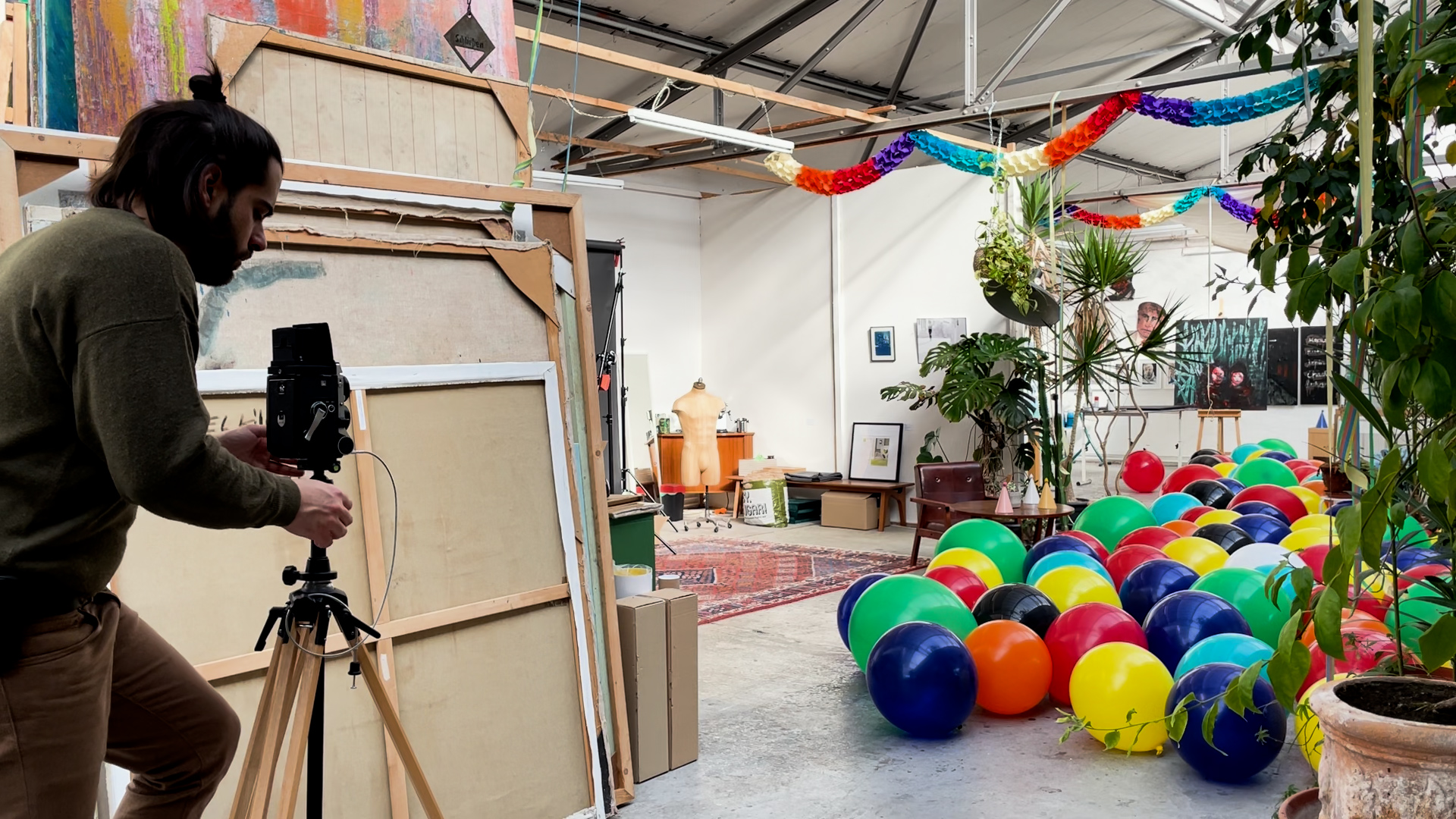
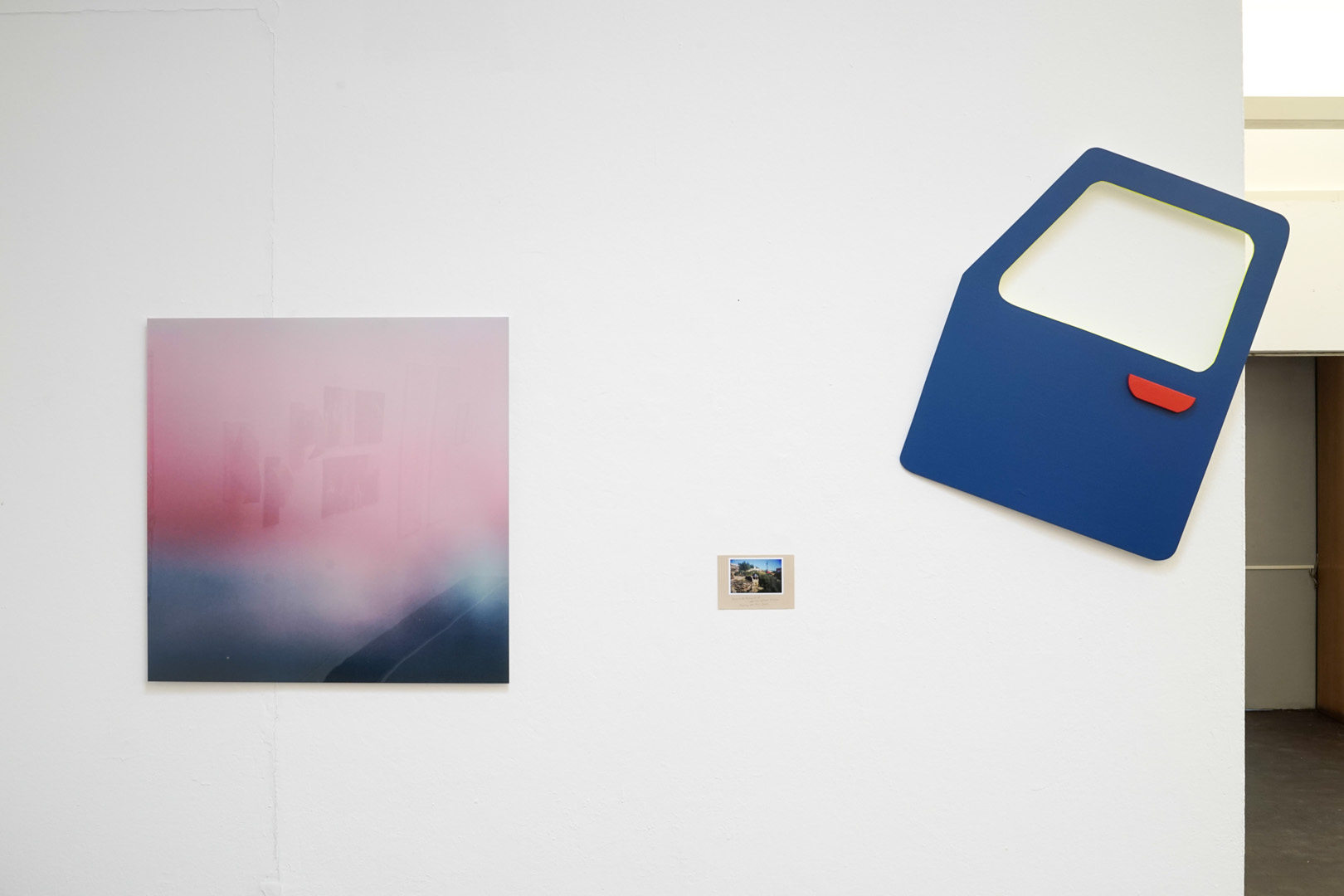
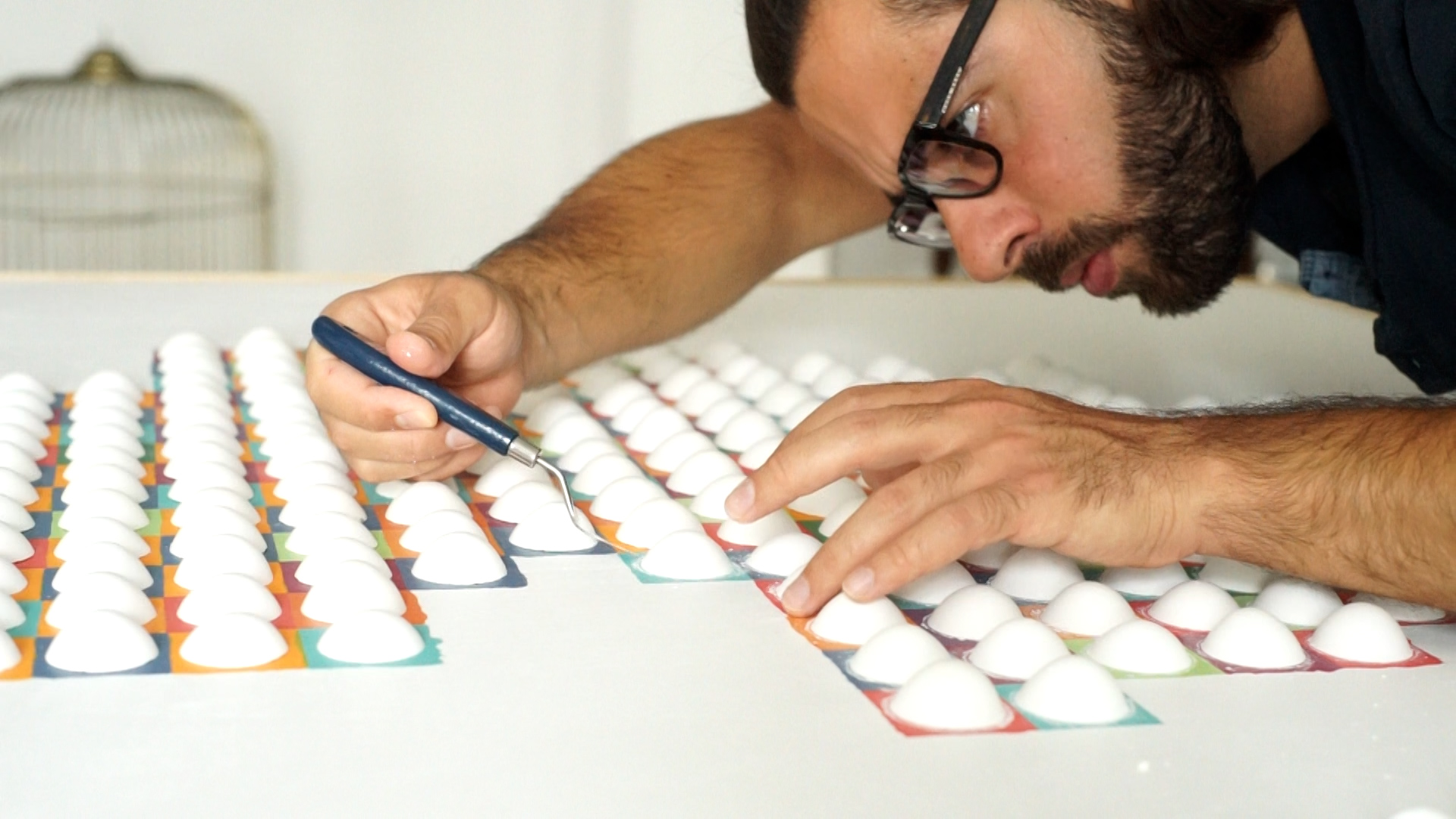
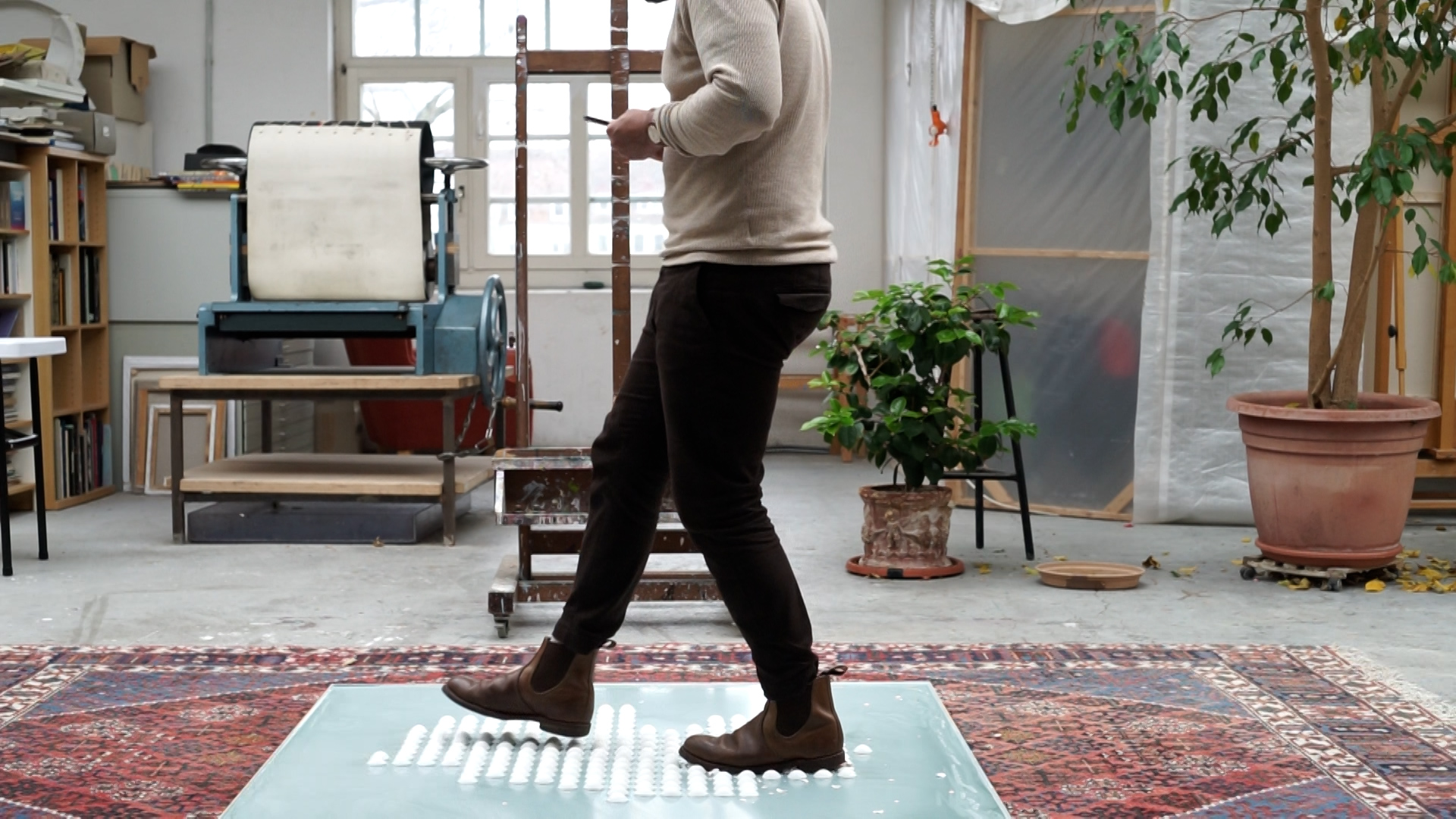
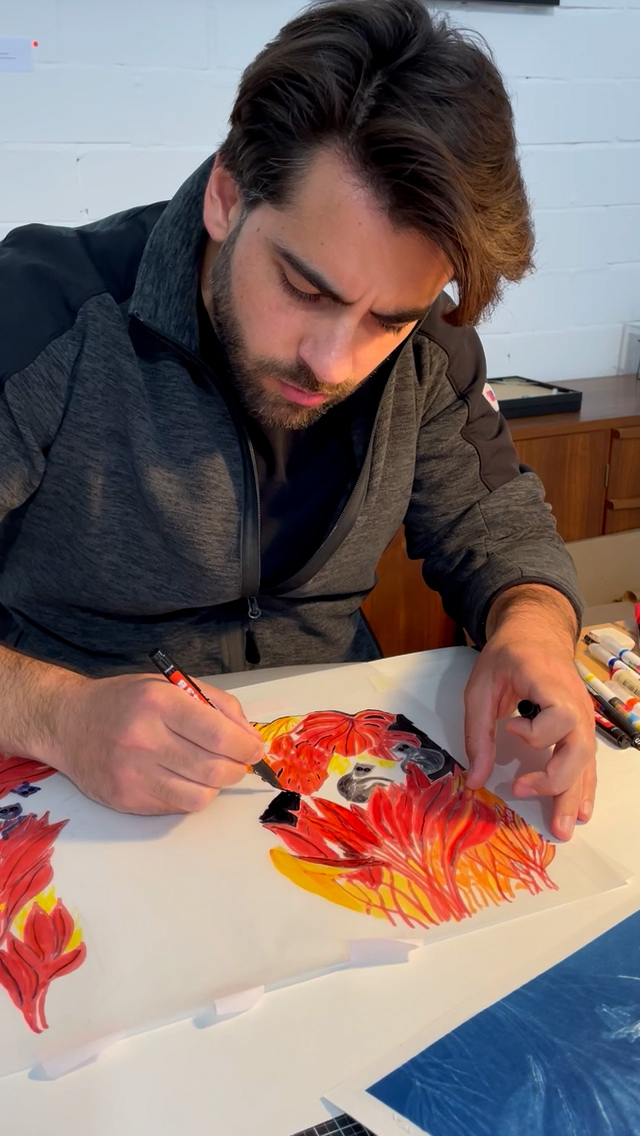
Work in progress for the artwork Esto es una fiesta! in the studio – Jesús Gómez
– Where are you heading next, and what projects are you currently developing?
At the moment, I am developing the series of intervened cyanotypes I mentioned earlier, Ausencias (Absences).
When I first began working on it, I imagined it would be a relatively short and straightforward series. Instead, experimentation and fortunate accidents have allowed the work to keep expanding, maturing, and gradually taking control of itself, almost as though it possessed a will of its own.

What I can say with absolute certainty is that I deeply miss photographing more frequently, and that I want to return soon to studio work and darkroom practice.
The past three years have been rather turbulent — a mixture of many good and many difficult moments, compounded by relocating the studio — and to navigate them, I have had to focus my practice on projects already underway.
I always carry a camera with me and never hesitate to use it. I also have an enormous archive of street photography — a genre I have defended since my beginnings — that continues to grow year after year and will eventually have to come to light.
But I miss poetic and conceptual photography with every passing day.
– What is your life in Germany like?
Wherever you live, life blows hurt the same, bills still have to be paid, a bad coffee can ruin your day, and a kind word can make it better.
What truly makes a difference are the codes: the instruction manual for moving through society.
You learn how to live in the place where you become an adult. There are aspects of everyday life in Spain that I no longer know how to navigate, or cultural behaviors that feel completely normal to me now but might seem uncomfortable there.
«What truly makes a difference are the codes: the instruction manual for moving through society.»
«You learn how to live in the place where you become an adult.»
– One wish you would like to see come true.
I would really like history not to repeat itself. I would find it terribly exhausting to return to the Middle Ages or to the 1930s. I don’t know, it would be rather inconvenient for me at the moment.
If you happen to know a genie granting wishes, do me a favor and pass the message along, please.
«I would really like history not to repeat itself»
Foot notes
*
Reisfeld am Abend (Rice Field at Dusk)
2023 · 100 × 100 cm · Frame made with recycled canvas
Acrylic, fabric, and needles on wood
Reisfeld am Abend connects the story of family migration with childhood memories and elements of Valencian culture. Through the use of traditional Valencian fabrics transformed into pincushions, the work reflects on notions of value, abundance, memory, and reuse in modest domestic contexts. The pincushions, made with fabrics typical of Fallas costumes as well as scraps from the artist’s family environment, engage in dialogue with an abstract representation of a rice field under a reddish sky at sunset, evoking the agricultural landscape deeply linked to Valencian identity.
**
Sollbruchstellenverursacher (Maker of predetermined breaking point)
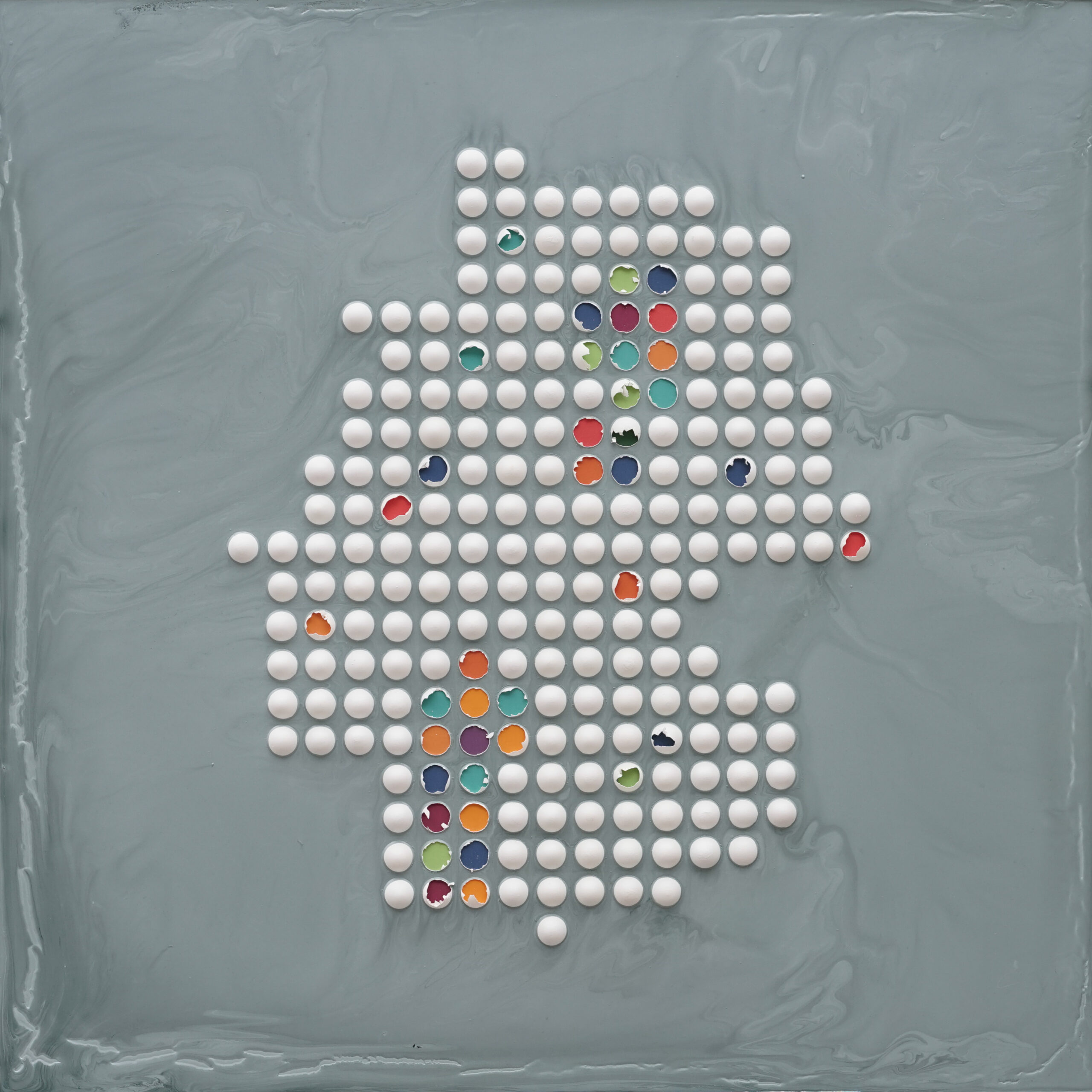
2023 · 131 × 131 cm · Eggshells and acrylic on wood
This work explores how migration “fractures” social structures, simultaneously generating new perspectives, cultural landscapes, and ways of living together. Inspired by the “Eierschalensollbruchstellenverursacher,” a German utensil for precisely cutting the tips of boiled eggs, whose name is almost unpronounceable for many foreigners, the piece uses stereotypes about Germans and migrants as a starting point to reflect on the impact of migration on contemporary society. The painting also serves as the conceptual basis for the related photographic series Bruchstellen.
***
How White is this?
2024 · 131 x 131 cm · Acrylic paint and eggshells on wood
The work How White is this? addresses the ambiguity and subjectivity of ethnic definitions based on nationality.
The cultural context in which the artist was educated recognizes the Spanish population as predominantly white despite the country’s multi-ethnic history and their physical differences from other European populations.
This designation implies a statement of nationality and social status – European Vs. non-European – rather than a question of color or ethnicity. It implies, depending on the intention of the speaker, distancing oneself from people from countries bordering Spain or Spanish-speaking countries, with which the Spanish population shares origin.
How White is this? is a kind reminder about these common features and a call to think about identity.
More info
Jesús Gómez – Instagram Jesús Gómez Artist – Instagram Jesús Gómez Photography
Images of Jesus Gomez´s works and his work in the studio (C) Jesús Gómez

ÚLTIMA PORTADA







Entradas recientes


0 comments